Vincent, an urban forester, has spent several years creating a flourishing native garden in his yard. His advice to those wanting to do the same: begin with a small a small patch or existing bed to convert to native plants.
In the beginning, Vincent’s yard was full of the invasives typical of Takoma Park. And that’s where he started, pulling out the invasives.
As areas were cleared, he began planting the natives he loves. Then as these plants flourished, he was inspired to watch salamanders and small reptiles return to his yard.
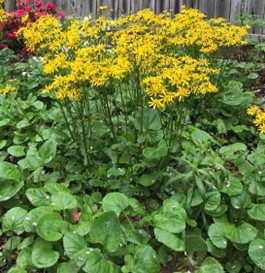
After you pull out invasives, Vincent recommends you plant a native groundcover so the invasives don’t return as easily. He likes golden ragwort (Packera aurea) because it grows well in shade.

As you might imagine, Vincent has been exposed to the benefits of native ecological restoration through his work. Naturally, he has learned about many fun and unusual native plants. Vincent planted Opuntia humifusa—Eastern Prickly Pear—in his garden, the only cactus native to the mid-Atlantic. It is a low growing cactus with bright yellow flowers, and grows well in a dry sunny spots.
I appreciate the advice to pick out a small space to work with and fill it with native plants that you love. If we change our yards a bit at a time, our perception of what makes a beautiful garden will change, too. This allows for a bit of wild adventure, and our yards will become an oasis for life.
–Sharon Broderick
Here are a few of Vincent’s favorite native plants:
Tree: blackgum—Nyssa sylvatica
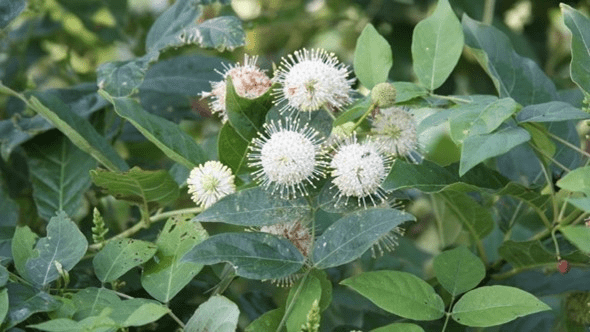
Shrub: buttonbush—Cephalanthus occidentalis
Herb: golden ragwort—Packera aurea
Grass: purple lovegrass—Eragrostis spectabilis
Fern: sensitive fern—Onoclea sensibilis
Vine: trumpet honeysuckle—Lonicera sempervirens
Aquatic plant: rose mallow—Hibiscus moscheutos
Spring ephemeral: Dutchman’s breeches—Dicentra cucullaria
 Friends of Native Trees in Takoma