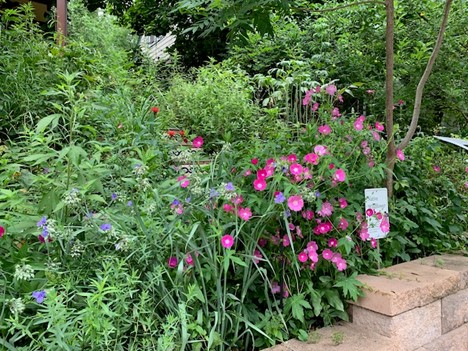
Jeremy, a native gardener, sees gardening as his way to rebuild the environment and take care of Earth. He is passionate about native plants and a knowledgeable botanist. Jeremy views native gardens as ecological systems where everything affects everything else: the soil and the water affect the plants which in turn provide for birds and insects.
In 2017 he began to recreate his Takoma Park yard and make it a pollinator’s paradise. At first, Jeremy worked in small sections, pulling invasives and mulching. Later he evaluated the ecology of each area—wet or dry—sunny or shady—and selected the natives to plant. He planted shrubs and small trees and direct-sowed seeds for ground cover and flowers.
Jeremy is a firm believer that you can successfully direct sow seeds for many native plants. He saves seeds and has found them very viable in his garden. Finally, seed saving can help gardeners avoid the high cost of native plants bought from many plant sellers.
To learn about seed saving, he has followed research from the Mount Cuba Center botanical garden. Jeremy also follows Heather McCargo, founder of the Wild Seed Project, who describes a simple method to plant native seeds in this article. Prairie Moon Nursery, a native plant seller, has also been a resource for native seed harvesting and germination.
His advice: treat your soil well, think about your space in terms of ecosystems, and direct sow native seeds.
Jeremy’s favorite plants include the following:
Herbs: Fern-leaf phacelia (Phacelia bipinnatifida) because it’s so easy to grow, pollinators love it, and it looks great. Native asters (symphyotichum spp.), especially calico aster (S. lateriflorum).
Grass: American beak grass (Diarrhena obovata), which forms a beautiful fountain shape and spreads, but not aggressively.
Shrub: Northern spicebush (Lindera benzoin), which blooms early, hosts the spicebush swallowtail butterfly, and produces berries for birds to eat. (Editor’s note: individual spicebush plants produce either male or female flowers. Only a male and female plant near each other will produce fruit.)
Sharon Broderick
 Friends of Native Trees in Takoma