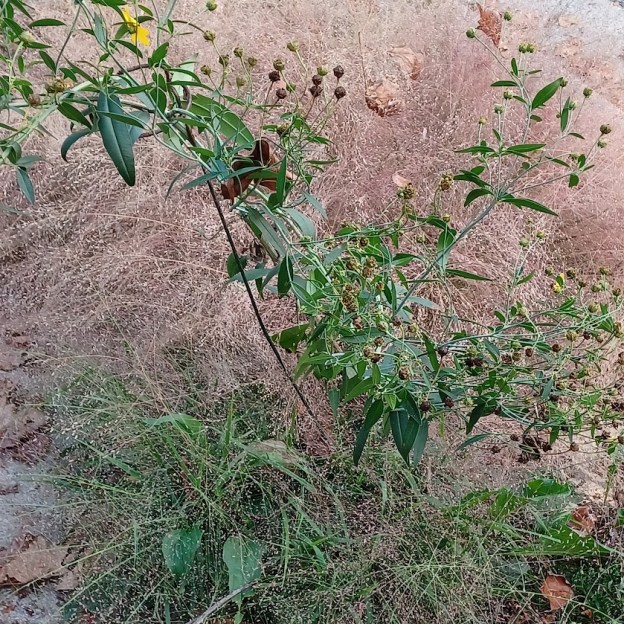
Sometimes a native plant has such a wonderful name that you can’t help but be intrigued. Such is the case with purple lovegrass (Eragrostis spectabilis).

In summer, the seeds of this grass, and then the stalks bearing them, are tinged with purple, which give the plant’s dome-shaped mounds a hazy pink glow. As summer gives way to fall, the pink fades to shades of blush and beige, and the finely textured stalks capture morning dew. As the Latin name also suggests, this grass is spectacular.
The geographic range of purple lovegrass impresses, too. The grass grows wild in every state east of the Continental Divide (skipping Montana) and in Arizona.
Purple lovegrass thrives in full sun in sandy or poor soil. It shrugs off the hot, dry spells of peak summer that make many other plants wilt, as demonstrated by the specimen below, photographed this month. It was planted two years ago on a sidewalk verge and neglected most of this summer.
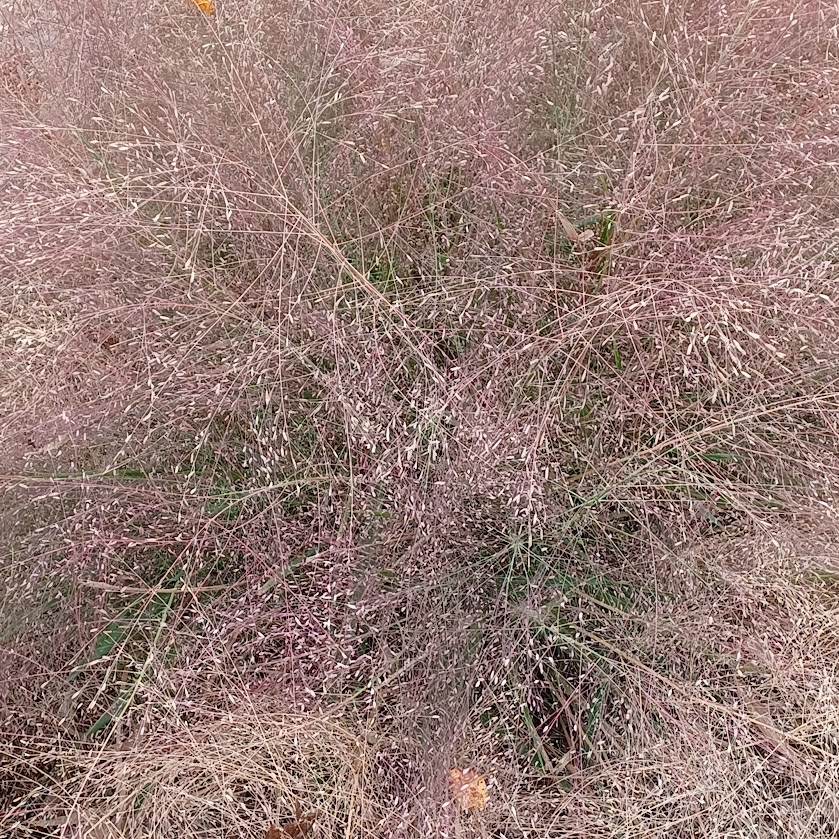
In moister and more fertile soils, in fact, taller perennials will outcompete purple lovegrass. So, give it tough love. Don’t coddle it, but take care to weed around it while it gets established.
For all its toughness, purple lovegrass is delicate in appearance. Its neat mounds grow about 12 inches tall excluding the seed stalks, which may reach another foot in height. The stalks can create a scrim-like effect in front of and between taller plants. To ensure it “pops” in a garden bed, purple lovegrass should be planted in small groups.
Finally, purple lovegrass is deer-resistant.
What’s not to love?
–Meg Voorhes
 Friends of Native Trees in Takoma