
As the days grow longer, FONTT gardeners emerge from hibernation to plan. They know the harsh conditions of the last growing season—drought, extended high temperatures and hungry deer—are likely to return. Still, they celebrate the native plants that persisted and even thrived last year.
For Louise Howells, last summer’s star was box huckleberry (Gaylussachia brachycera). This low evergreen shrub, considered endangered in Maryland, is native solely to mid-Atlantic states and Kentucky and Tennessee. In part-shade or shade, it spreads slowly to become an attractive ground cover, with delicate flowers in spring, blue berries in summer and bronze foliage in fall. It can handle dry soil.

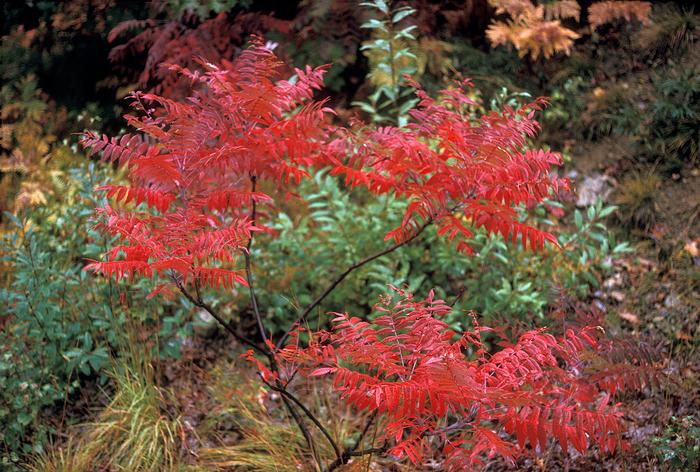
Chandan Hebbale sings the praises of smooth sumac (Rhus glabra) a suckering shrub 8 to 15 feet high with vivid red fall foliage. Its red berries, which last through fall, attract songbirds while deer and rabbits leave it alone. It, too, can handle drought.
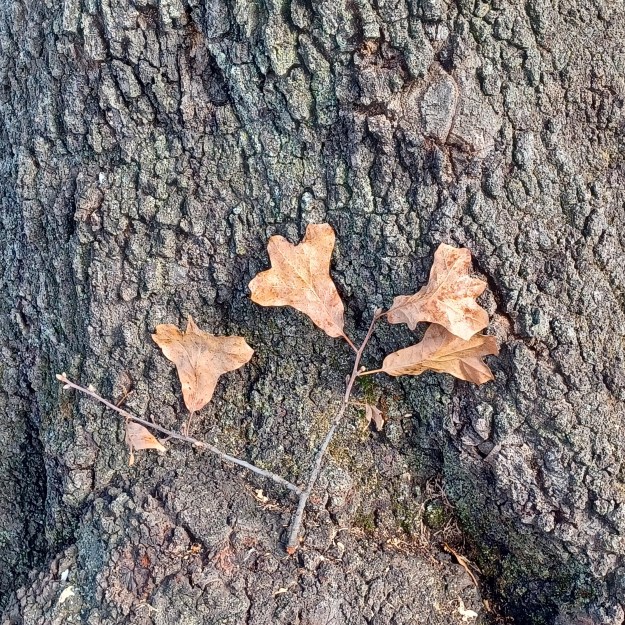
Chandan also gave a shout-out to a blackjack oak (Quercus marilandica) on Columbia Avenue. The species grows naturally in rocky, poor, dry soil where it tends to look scruffy. In slightly better soil, as in this case, it develops into a symmetrical shade tree with reddish-bronze fall foliage.
Larry Himelfarb hails New England aster (Symphyotrichum novae-angliae), New York aster (S. novi-belgii), and smooth blue aster (S. laeve), which reward him with purple and lavender blooms in late summer and well into fall. They tolerate dry soil and are deer-resistant.

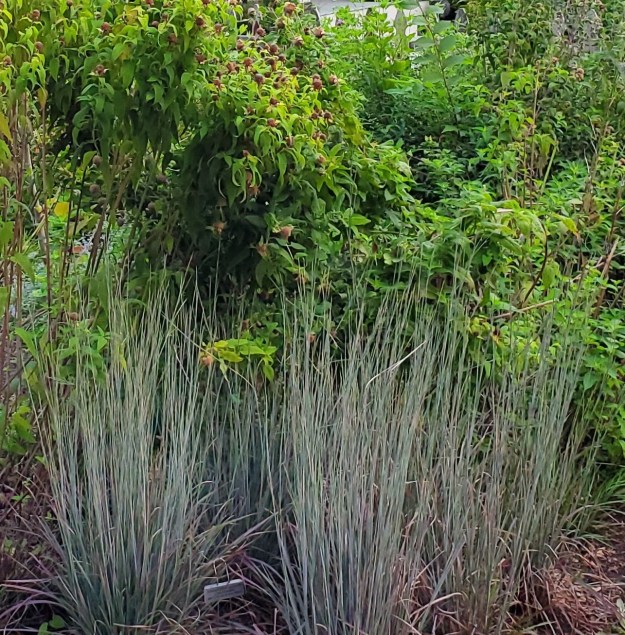
The little bluestem grass (Schizachyrium scoparium) Diane Ives planted as plugs along her front sidewalk in spring 2023 were “surprisingly hardy” last summer. Her Shrubby St. John’s wort (Hypericum prolificum) and fragrant sumac (Rhus aromatica) also were able to take the heat. If the soil was slightly damp Diane skipped watering, even on the hottest days.
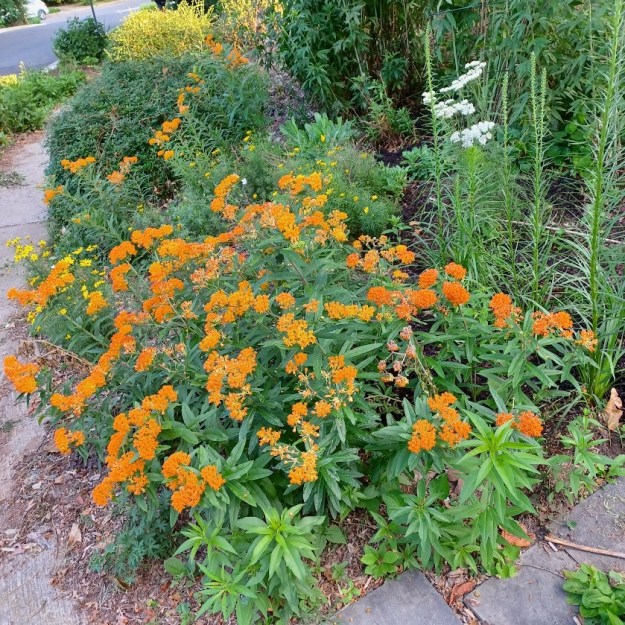
For this gardener, the blooms of yarrow (Achillea millefolium) and butterfly weed (Asclepias tuberosa) looked lovely together in June and July in a hot sunny corner unprotected from deer, and the purple lovegrass (Eragrostis spectabilis) by a sidewalk was vibrant and bushy in September after two months without watering.
—Meg Voorhes
Photo credits: Native Plant Trust, Diane Ives, Meg Voorhes
 Friends of Native Trees in Takoma