
It started as a simple task—Takoma Park residents Jen and Scott tore out the invasive English ivy that carpeted a large section of their backyard. Read about the harm that invasive plants do to the environment.
Then it rained.

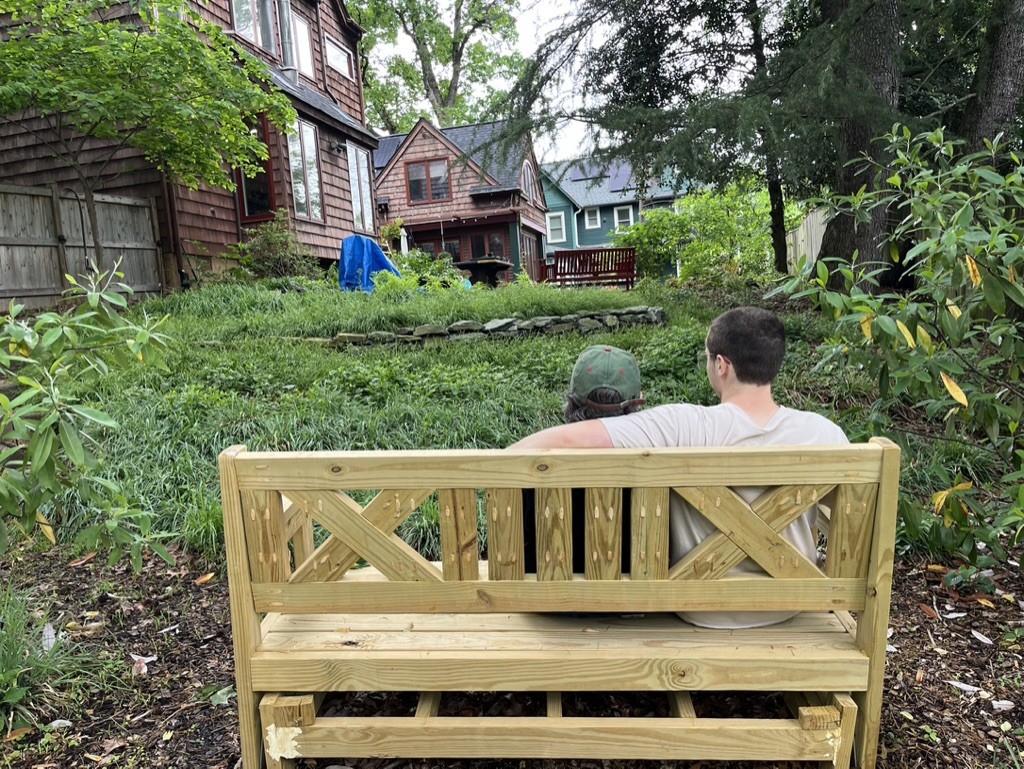
The couple discovered that although English ivy crowds out native species and weakens trees, it also holds soil in place in sloping yards. The erosion that started once the ivy was removed threatened the foundation of their house.
The couple hired Backyard Bounty to shore up the hillside with berms and to plant native species to hold the soil in place. Since then, Jen and Scott and their son Nathaniel have expanded the project into a whole-yard makeover.
The family removed other invasives, such as tree of heaven and nandina, along with non-native hollies. Water-loving plants such as ferns, native sedge, and sweet bay magnolia now grow in place of the ivy.
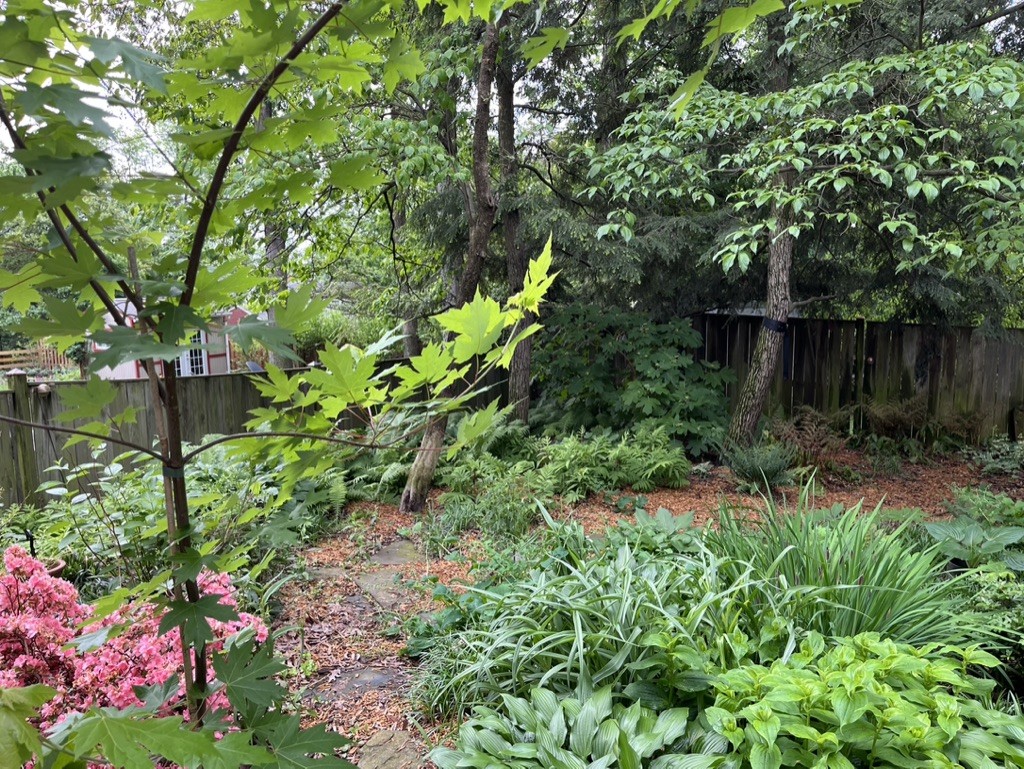
Teenaged Nathaniel has taken the lead on growing fruits, vegetables, and culinary herbs as well as working on the woodland gardens. He and his father designed and installed a drip irrigation system.
The back yard is particularly lush, thanks to fencing that keeps deer out. But many plants in the open front yard are doing fine, despite deer and rabbits. These include heuchera, blue-eyed grass, sensitive fern, and creeping phlox.
Highlights of what the family learned from their intensive backyard makeover include:
1) Not all natives will thrive. When that happens, try a different species.
2) In our climate, native plants often need watering or irrigation, despite contrary claims.
3) Check with neighboring gardeners and local online native plant communities for new plants when gardens are thinned. Columbine and bleeding heart are some of Jen’s favorites obtained this way.
Nathaniel found unexpected satisfaction in the makeover.

“I like seeing all the little things that come when you work the land,” he says. “The worms in the ground, the way an old tree stump when ground up makes amazing soil, the array of flowers and colors throughout the year.”
The makeover experience led to Nathaniel working one summer at a farm in Olney. It has also raised his interest in studying agriculture science as he heads to college.
–Bob Gibson
Photo credits: newly planted sedges by Nathaniel, all others by Bob Gibson.
The sedges planted were Carex amphibola (eastern narrowleaf sedge), Carex eburnea (bristleleaf sedge) and Carex flaccosperma (thinfruit or blue wood sedge).
Learn more about invasive plant species on FONTT’s Remove Invasives webpages.
 Friends of Native Trees in Takoma