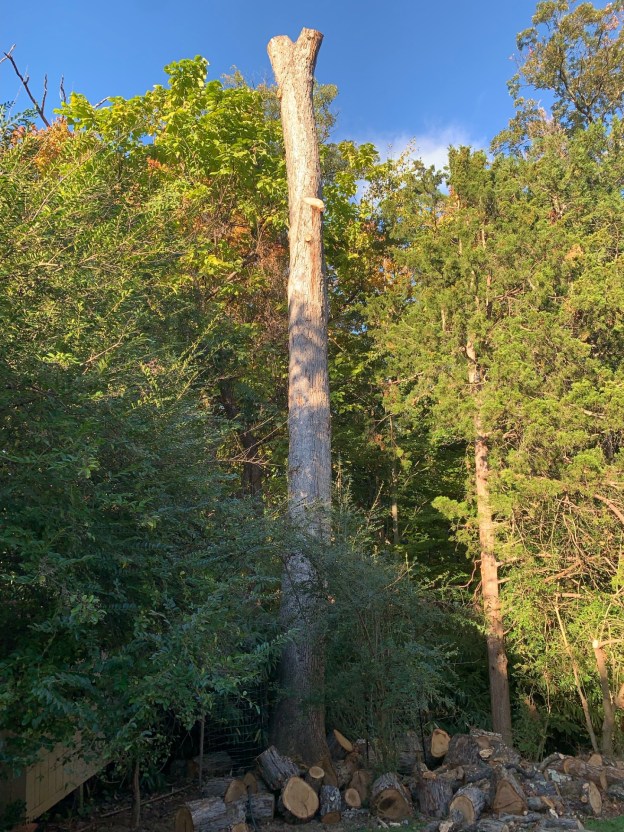
If you practice leaving the leaves, you may be ready to leave the occasional dead tree or “snag” standing on your property, too. Like fallen leaves, snags offer abundant resources for wildlife.

Nationwide, snags support 1,000 species as “vital habitat,” according to the National Wildlife Federation. Dead wood attracts insects, and the birds that eat them. Woodpeckers gouge snags, while chickadees, nuthatches, and other small birds probe the surface for food.
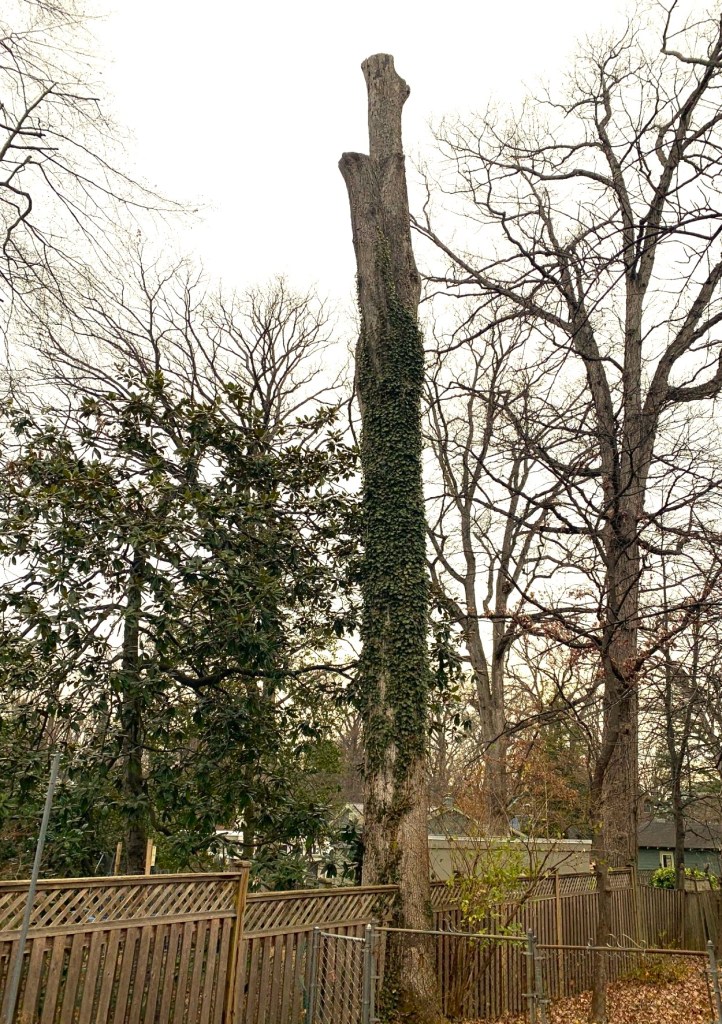
As decay continues, birds, squirrels, raccoons, and other wildlife take advantage of the softening wood to create cavities as nests or homes. Narrow crevices in decaying trees can provide shelter for bats and mice as well as smaller bird species such as house wrens.
Snags can be beautiful as well.
When a beloved white oak died on the Takoma Park property of James and Gene, they chose to leave the snag. After cutting off the branches, most of which hung over the house, they left the trunk as high as possible to still be able to clear the house should it fall. “Its height is part of its beauty,” they say. (See photo at top of page.)
Neighbors, they add, appreciate it as a “memorial in the sculptural essence of what was once a huge and glorious matriarch.”
They emphasize that nothing was chipped, nor removed from the property—the branches, cut into logs, have been left on the ground. Already, warblers comb the snag’s surfaces, and soon homes will be pecked into this vertical refuge. “There are years of purpose left here,” they say.
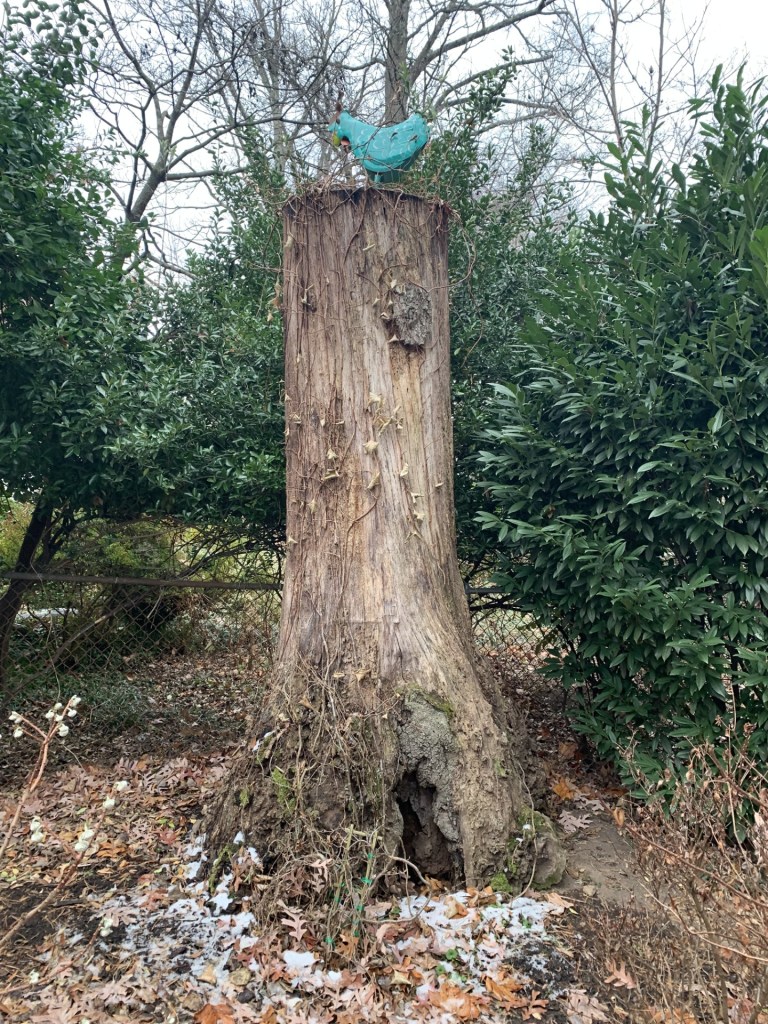
In another back yard, on Park Avenue, a tall snag offered an opportunity for whimsy. It is topped with a bird sculpture as if to invite other avian passersby to hang out there.
If you want to keep a snag, consider the following:
- Consult an arborist experienced with snag maintenance.
- Limit the snag height and width to prevent damage should it fall.
- Avoid termites from attacking a structure by keeping snags the recommended distance from the building.
—Tim Rahn and Meg Voorhes
Photo credits: Snag on Pepco property by Lizz Kleemeier, all others by Slater Knowles
 Friends of Native Trees in Takoma