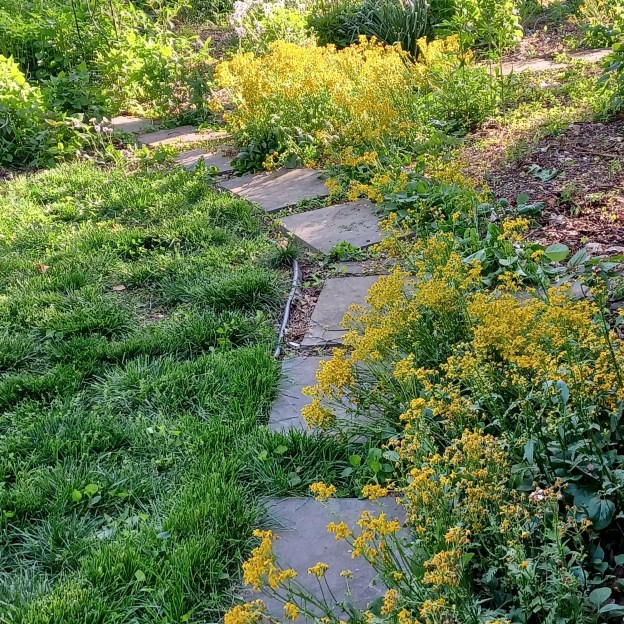
In just a few weeks, a glow will rise from verges and yards in Takoma Park as golden ragwort (Packera aurea) and running groundsel (Packera obovata), burst into bloom.
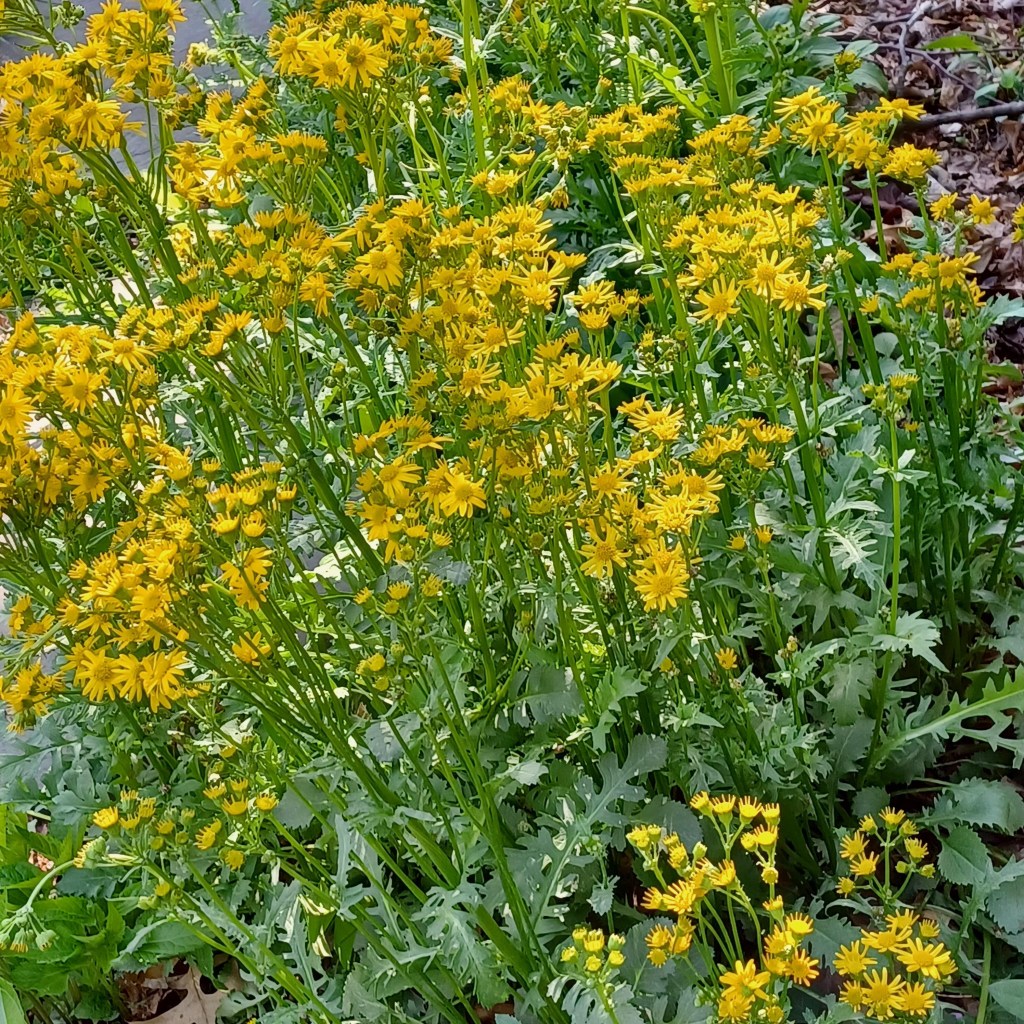
Native to much of the eastern United States, the daisy-like golden yellow flowers of the two closely related perennials appear in late March or early April: just in time for native bees hungry for nectar after emerging from hibernation and humans impatient for springtime blooms.
Atop stems one to two feet tall, the flowers of golden ragwort (also called golden groundsel), rise from rosettes of heart-shaped, dark green leaves close to the ground. Running groundsel’s flowers are carried on slightly shorter stems, and overall, the plant appears daintier than its cousin with smaller, egg-shaped leaves.
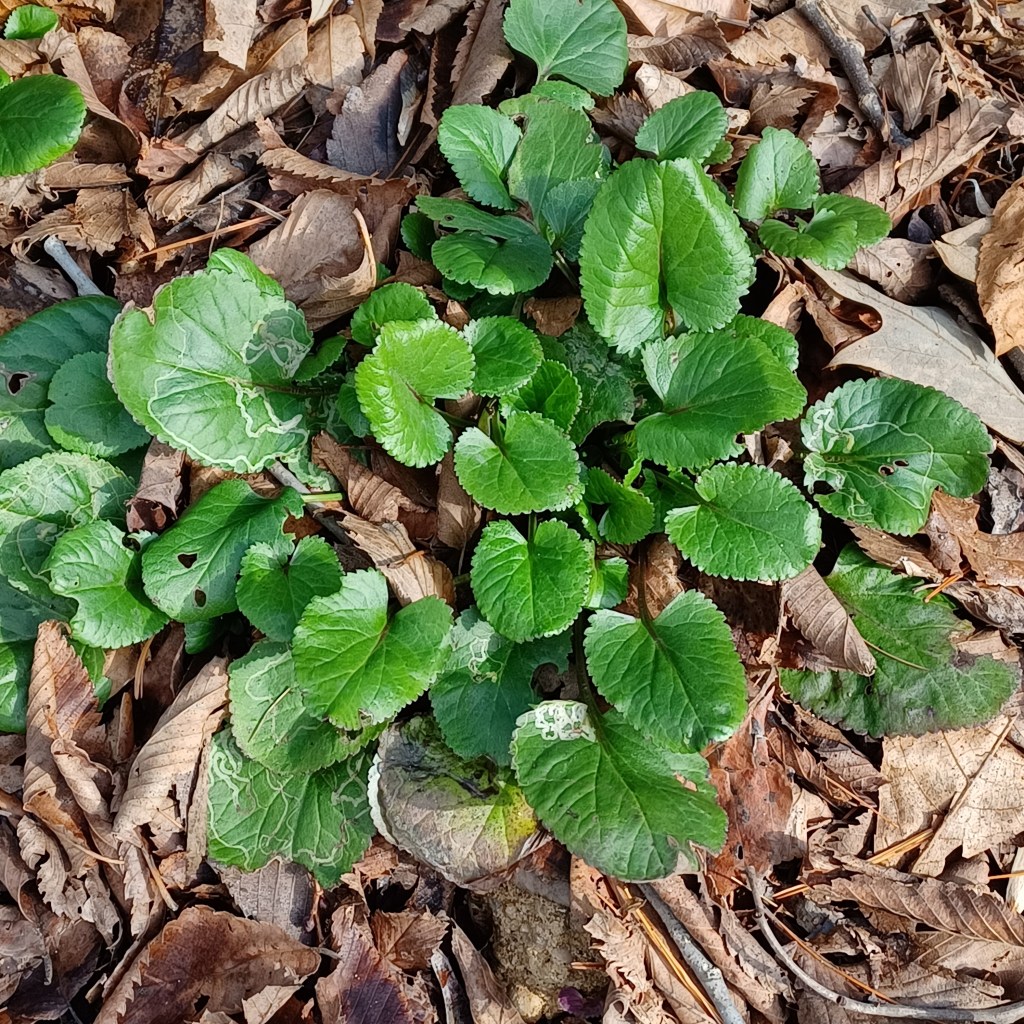
In partly sunny locations, the rhizomes of both species spread quickly to form leafy carpets that suppress weeds but play well with other garden plants. Both plants, given their low profiles, can serve as “green mulches” that fill in bare spots under shrubs and taller perennials.
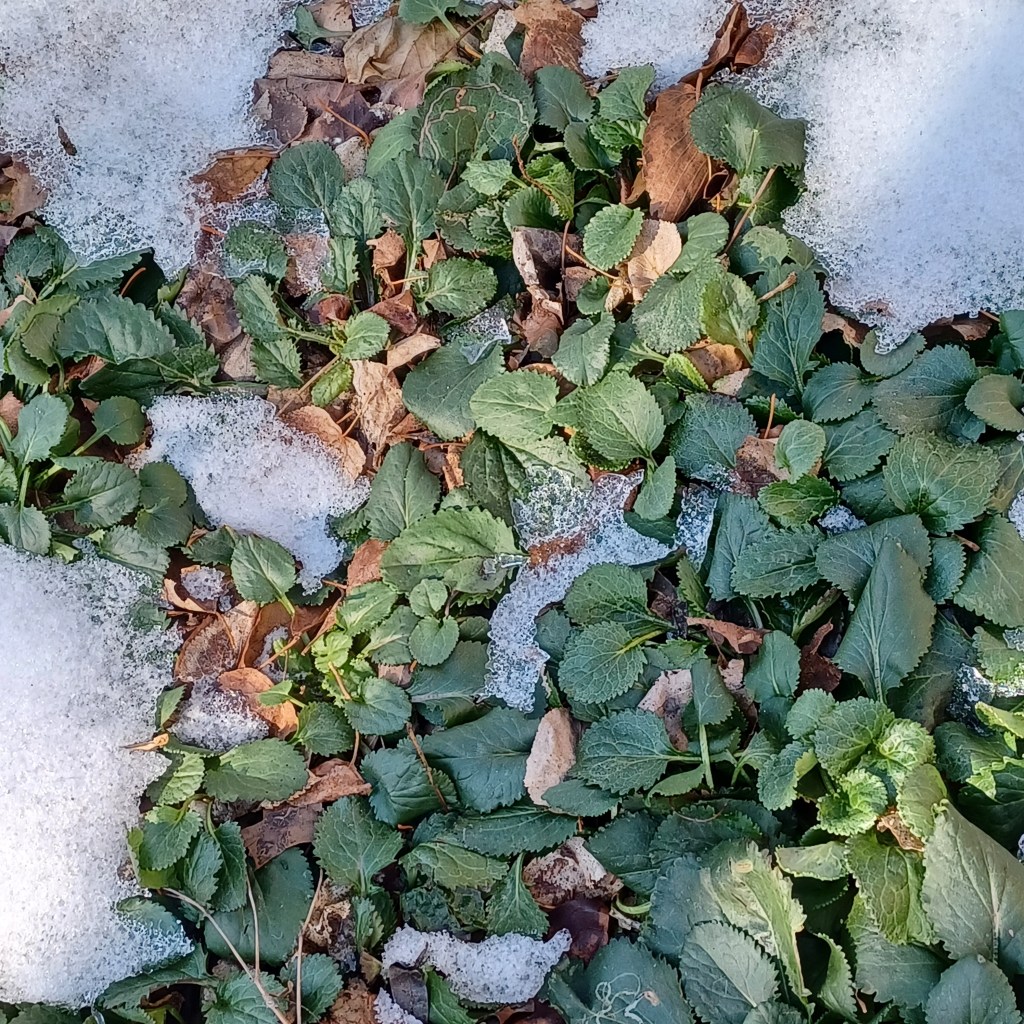
Another welcome feature is that they are evergreen, even under snow or during extended sub-freezing temperatures such as we have had this past winter. Long-suffering Takoma Park gardeners will also be pleased to know that both species are deer-resistant!
Despite these virtues, there is a drawback: running groundsel enters an unattractive phase for one to two weeks after its flowers fade and its stems collapse. This shaggy period seems less pronounced for golden ragwort.
Since both species prefer moist soil, they tend to be happiest in partial or filtered shade and even full shade since the soil is less likely to dry out between rain spells. The full sun locations that suit them are often along streams and ponds where the ground remains reliably moist.
If light and moisture conditions are met, however, these Packera species don’t require much care from the gardener.
–Meg Voorhes
Photos by Meg Voorhes
 Friends of Native Trees in Takoma