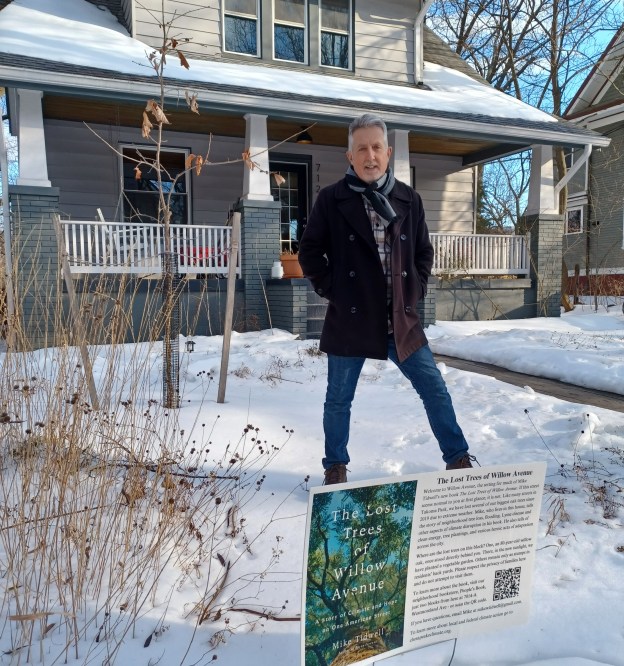
Like many residents of Takoma Park, Mike Tidwell—the founder and executive director of Chesapeake Climate Action Network—is committed to environmental responsibility. Mike’s recent book, The Lost Trees of Willow Avenue, describes how climate change has decimated the once massive trees on his block.
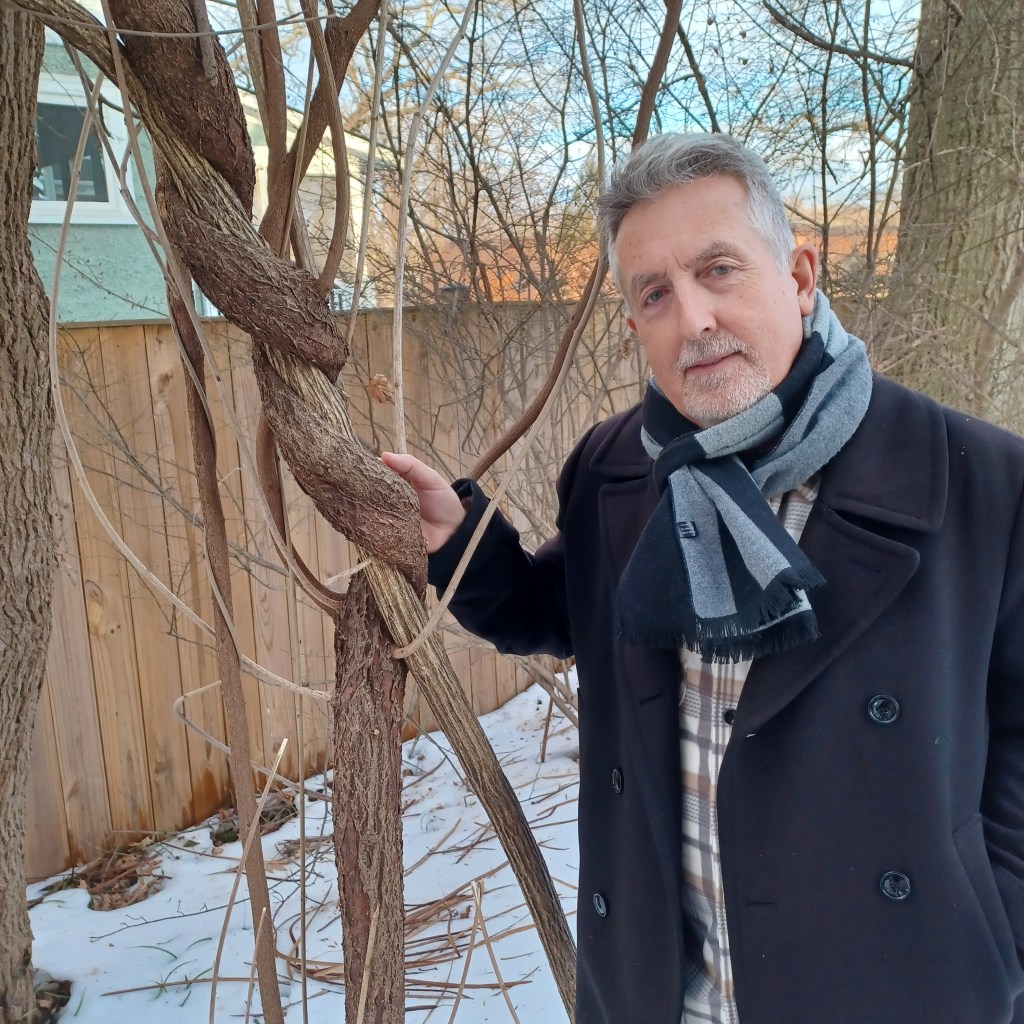
Also in common with many Takoma Park residents, however, and through no fault of his own, Mike’s yard is crowded with invasive shrubs and ground covers: bush honeysuckle, Oriental bittersweet, multiflora rose, English ivy, and liriope.
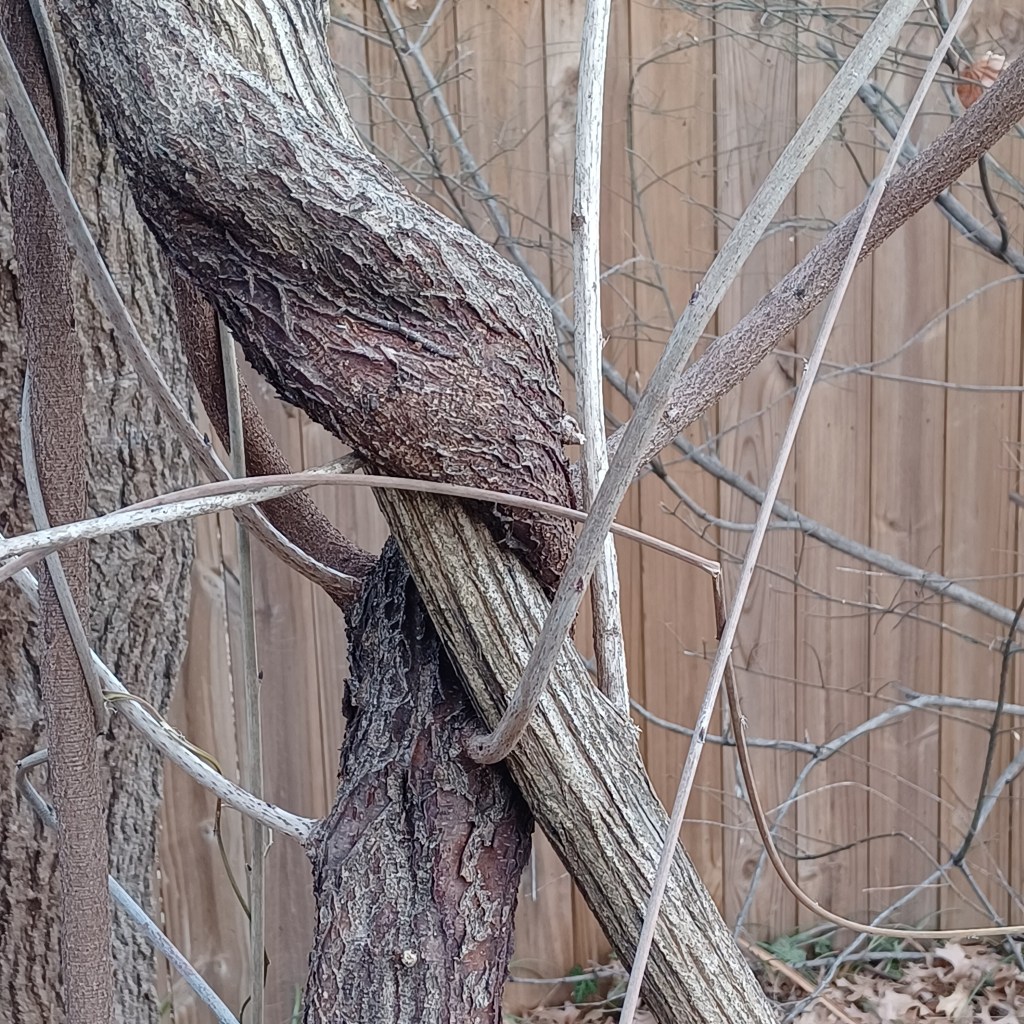
These species can rapidly take over and prevent native plants from taking root. The coils of Oriental bittersweet can strangle and fell smaller native trees. Our native fauna—including insect pollinators and birds—suffer as a result.
When FONTT member Lizz Kleemeier asked Mike if he’d allow his yard to be a demonstration site for FONTT’s fledgling “Remove and Replace program,” he answered with an enthusiastic yes.
“I always want to walk the environmental walk, but it can be hard to keep up with invasives,” Mike told FONTT. “I was thrilled to be asked to participate in the Remove and Replace program,”
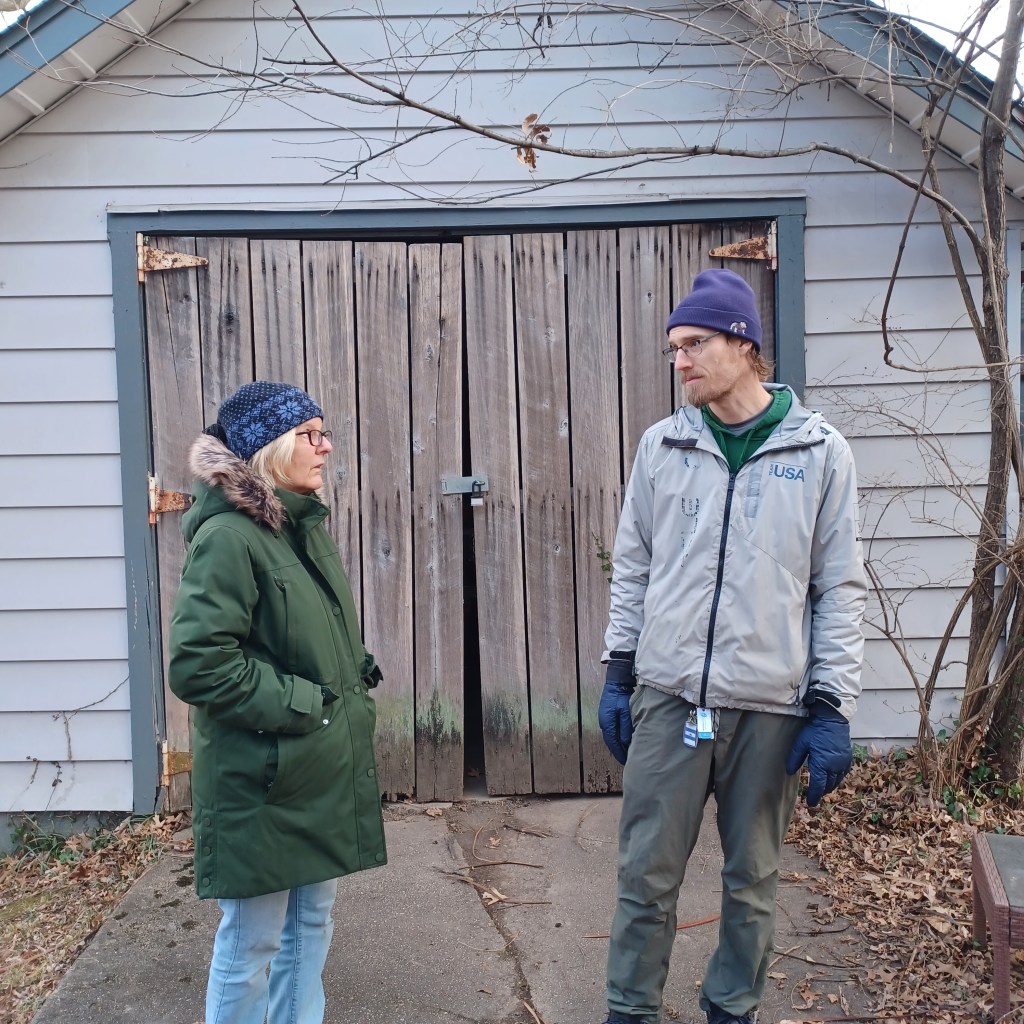
Last month, a FONTT team led by Lizz and fellow member Slater Knowles visited Mike’s yard for a preliminary assessment. They evaluated two areas for remove and replace.
In the first, an area between the driveway and the southern property line, bush honeysuckles and other woody invasives have formed a tall hedge. The stems of these plants, however, are thin enough to be removed by a weed wrench in a few two-hour work sessions.
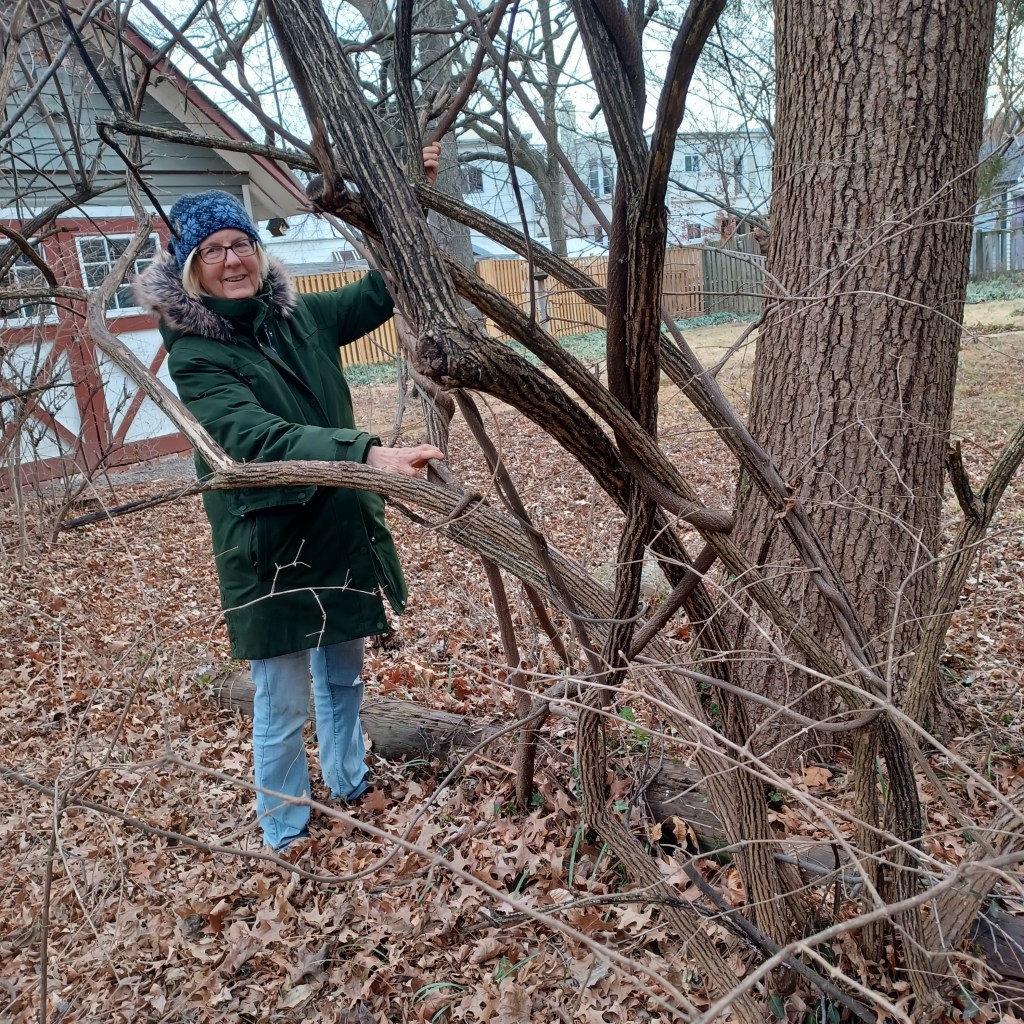
The second area, along the northern border of the property, though, the honeysuckle and bittersweet have grown into small trees. Removal will require sawing the shrubs down. The stumps will need to be painted with herbicide to prevent resprouting.
Imagining the native plants for the “replace” phase, after considering the solar exposure and soil moisture conditions, provides inspiration. Possible replacements include red twig dogwood, hazelnut, and spicebush (available for free from FONTT) and witch hazel, flowering dogwood, and pawpaw (available for purchase from FONTT partner Bona Terra Nursery).
“I can’t wait to get started,” Mike said. “I want my yard to be a model for the community.”
—Meg Voorhes
Photos by Meg Voorhes
 Friends of Native Trees in Takoma