
The Ecological Landscape Alliance offers these quick tips about spring clean-up in the garden.
If you can leave it, leave it! The best habitat is that which we leave alone for the animals we share the world with. Unless you have invasive plants to clear, leave anything you can leave as long as you can.
But if you need to tidy up, here’s some advice for preserving habitat:
The following is a synthesis of the advice offered by Pawel Pielusynski, Brooklyn Bridge Park; Lelsie Duthie, Native Plant Horticulturalist; and Leo Kenney, Ecological Horticulturalist.
- Wait for clean-up until nighttime temperatures are regularly in the 50-55 Fahrenheit range. More larvae and pupae will have had a chance to emerge as adults.
- Cut back old stems but leave 12-18 inches. These stems remain habitat and breeding ground for stem-nesting bees and other insects. Leave the discarded stalks on the ground or cut them into short lengths — and leave on the ground. There may be larvae inside and the stems contribute to soil mulch.
- Use leaves as mulch. Mow them if necessary; most of the insects will have finished overwintering if nighttime temperatures are warm.
- But leave the leaves whole, if possible. Something beneficial is still living in that leaf litter. (Fireflies lay their eggs there.) Look for places where the whole leaves can be allowed to remain.
A deeper look at what you can do from the University of Maryland Extension
More advice on spring clean-up, from the Xerces Society.
Spring clean-up advice from one FONTT member
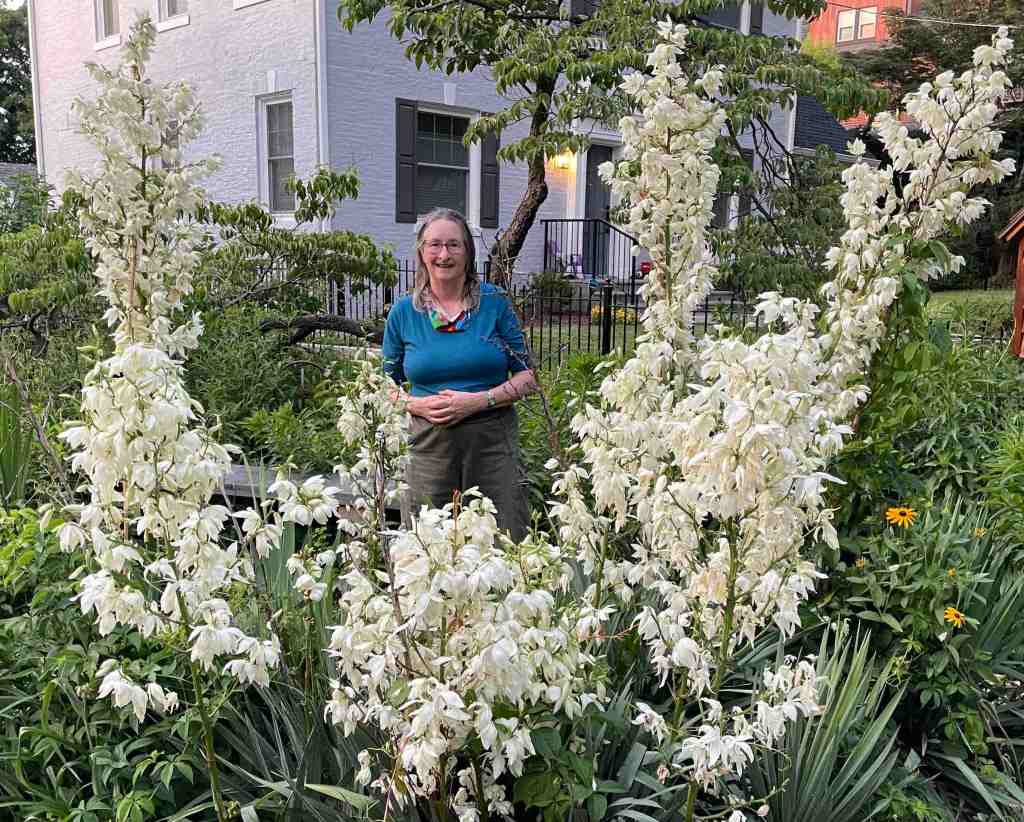
Enjoy the beauty of spring coming up all around you
For a few years now, I have left the leaves under my shrubs to decompose on their own. I sometimes spread around high piles to thin spots but otherwise I let them be. They ARE the mulch. No more bags of mulch needed. Once things start to grow, they will quickly disappear.
If you are cutting things back, leave plenty of length on the stalks and pile the pieces somewhere. There are likely insects in or on them who will appreciate not being mulched and can still emerge from the stalks.
For the fallen twigs and branches, I make a border around some of my garden beds with them, where they naturally break down and feed the soil. (I have a stick pile out back for the bigger ones.)
— Liz Crafford
 Friends of Native Trees in Takoma