
Anna Mische John, Vegetation Maintenance Supervisor for the City of Takoma Park MD, sees in her work how liriope is escaping from yards and crowding out natural growth in our city parks. Liriope makes Anna’s list of the top three most hated invasive plants.
Both running liriope (Liriope spicata) and clumping liriope (Liriope muscari) are considered invasive in northern Virginia, and in the mid-Atlantic by the National Park Service. Both species of liriope are also on the Mid-Atlantic Invaders Tool list of plants that are “invasive or at risk of becoming invasive.” So far, the Maryland Invasive Species Council lists only Liriope spicata as invasive.
As Meg Voorhes explains in a blog post, many invasive plants were originally not considered invasive and introduced through the nursery trade for home gardens. In other words, any ornamental plant should be considered a serious threat, if the species is tagged simply at risk of becoming invasive.
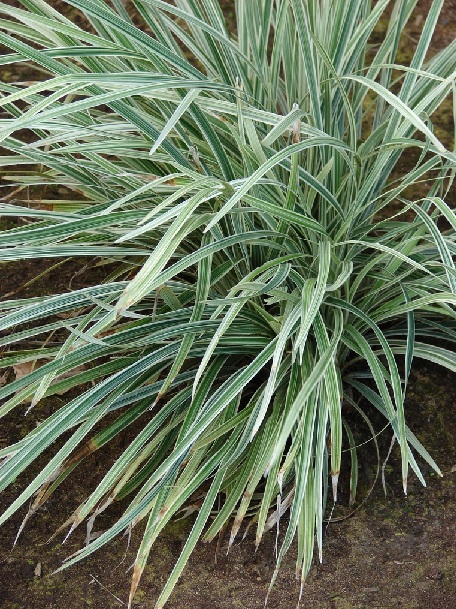
Photo credit: Liriope spicata by Rebekah Wallace, University of Georgia, Bugwood.org
Local sightings
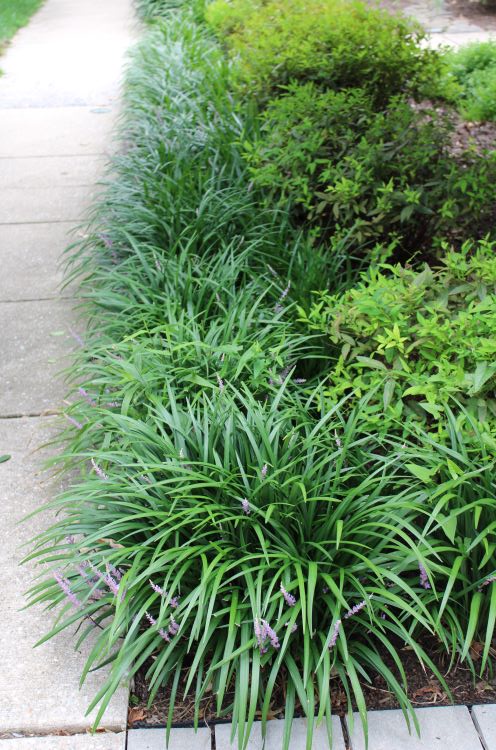

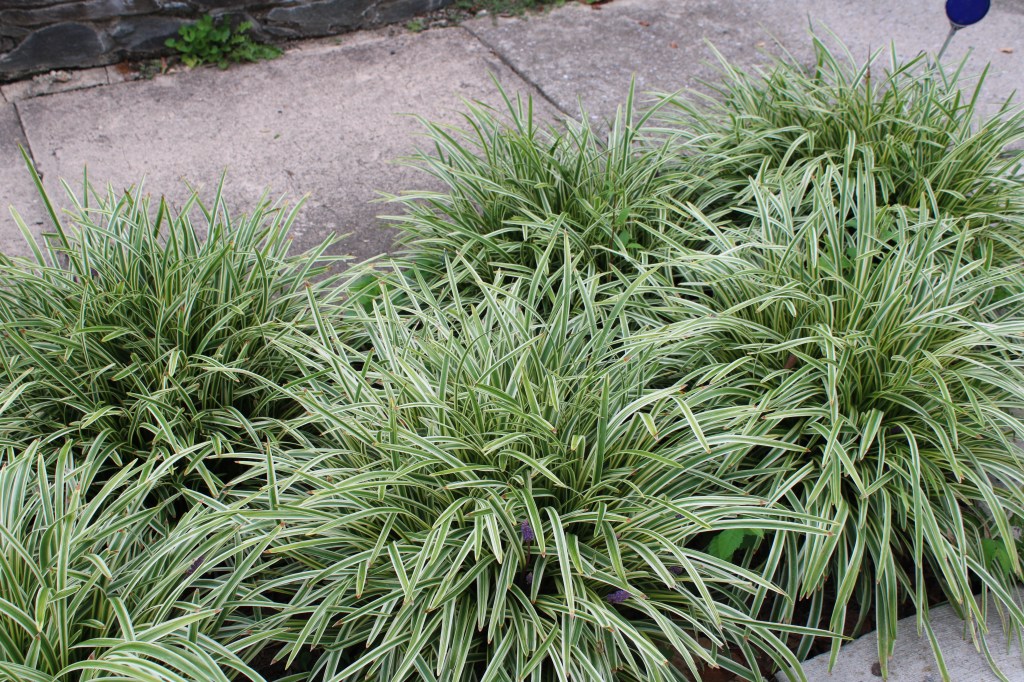
What to look for
L. muscari has leaves and flowers that are slightly larger than those of L. spicata, and more of a clumping habit. “Clumping” means that the plant spreads out from the base through very short stolons. It also spreads through seeds carried by animals and water.

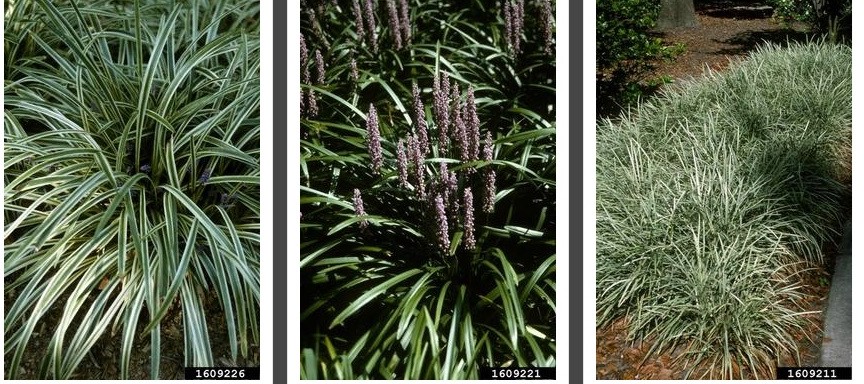
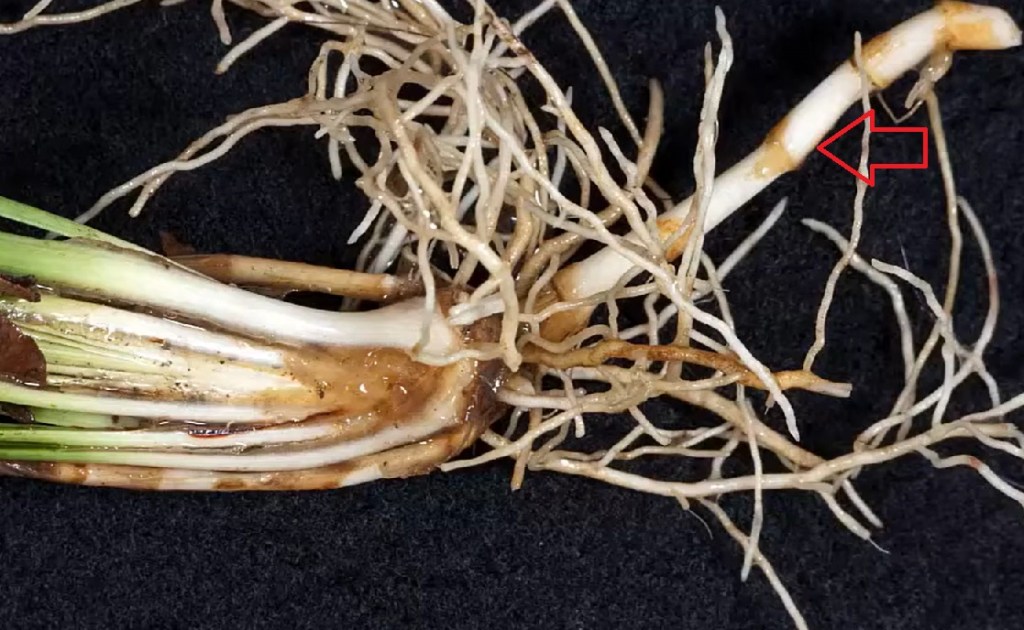
L. spicata has long, linear, thin leaves. It spreads by a rhizome, indicated by the red arrow in the first photo below.


What to do
Liriope is challenging to remove, especially if it is long-established over a sizeable area. The most effective method is to dig up the roots. However, the plants can regenerate from even a small root left behind, so it may take several years to eradicate liriope from an area. Smothering liriope with 6-12 inches of wood chips or multiple layers of thick cardboard can work but may take years to kill the roots.
What to plant instead
Liriope is used for a wide range of purposes and planting conditions. No single native plant will fit all of these needs and situations. Instead, you will have to find the native plant that fits your particular soil, light, and moisture conditions, and has an appearance that you like.
Various FONTT members have had good success using the following native groundcovers:
Christmas fern (Polystichym acrosticoides)
Golden ragwort (Packera aurea)
Lyreleaf sage (Salvia lyrata)
Robin’s plantain (Erigeron pulchellus ‘Lynnhaven Carpet’)
Sedges (Carex spp.)
Violets (Viola sororia)
If you think you don’t have any preferences, and simply want something to plant, look at river oats (Chasmanthium latifolium). This plant can handle sun, shade, compacted soil, drought, erosion, and has beautiful seedheads. However, it spreads aggressively and is a couple feet taller than liriope.
For more information:
1. Video-Master Gardeners of Northern Virginia
2. PDF-Master Gardeners of Northern Virginia
3. Non-native Invasive Plants of Arlington County
4. Non-native Invasive Plants of the City of Alexandria VA
5. L. muscari images bugwood.org
6. L. spicata images bugwood.org
7. Video-L. spicata identification
8. Izel Plants guide to selecting carex species as an alternative
 Friends of Native Trees in Takoma