Jump to Meg’s Plant List
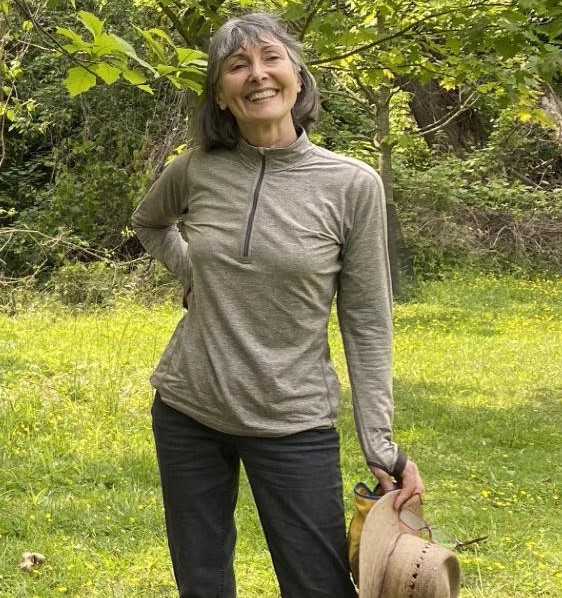
The ROW became more vibrant, in part because intriguing native species drifted into the more welcoming soil once the dense mass of liriope was gone.
–Meg, Holt Place
Over the last four years, I have transformed a tangle of invasive plants on two strips of land—one on and the other adjoining my property–into native plant gardens. Here’s how.
The ROW transformation begins, 2021-2022
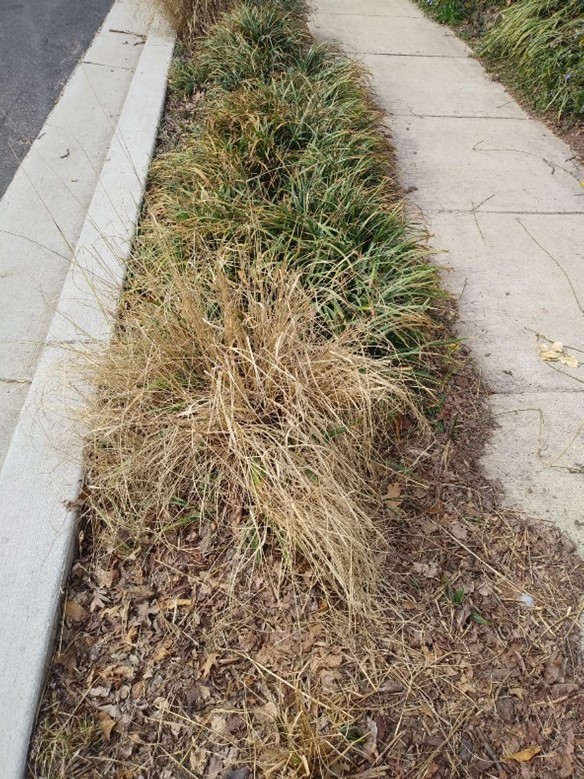
I focused first on the right-of-way (ROW) between the sidewalk and the street. The ROW had long been an eyesore, a mixture of grass and weeds that required mowing to look marginally presentable. When liriope moved in, I was pleased initially: it looked tidy and rapidly crowded out the previous weedy inhabitants.
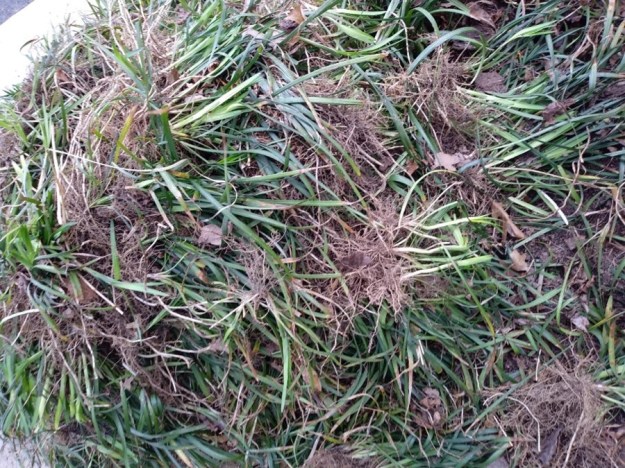
However, when the liriope began to spread up the bank opposite the sidewalk to advance on my front yard, I set forth with a digging fork in May 2021. The mass of the unearthed liriope was impressive.
I was becoming more aware of the benefits of native plants and decided the ROW could be an experimental site. The strip is about two feet wide, and the exposure ranges from full sun at the top, at the corner of Holt and Crescent, to part-shade further downhill.
Because people getting into or out of cars were very likely to step on new plantings, I tried to minimize my financial outlays. I got orange coneflower (Rudbeckia fulgida) divisions from neighbors. I had Heuchera villosa elsewhere in my yard and transplanted some divisions to the shadier end of the ROW. In the fall, though, I couldn’t resist purchasing a few pots of plantain pussytoes (Antennaria plantagnifolia) from Chesapeake Natives.
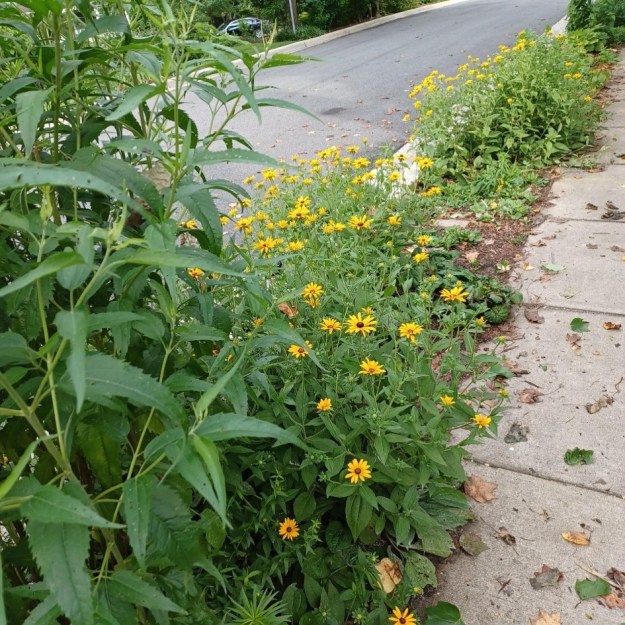
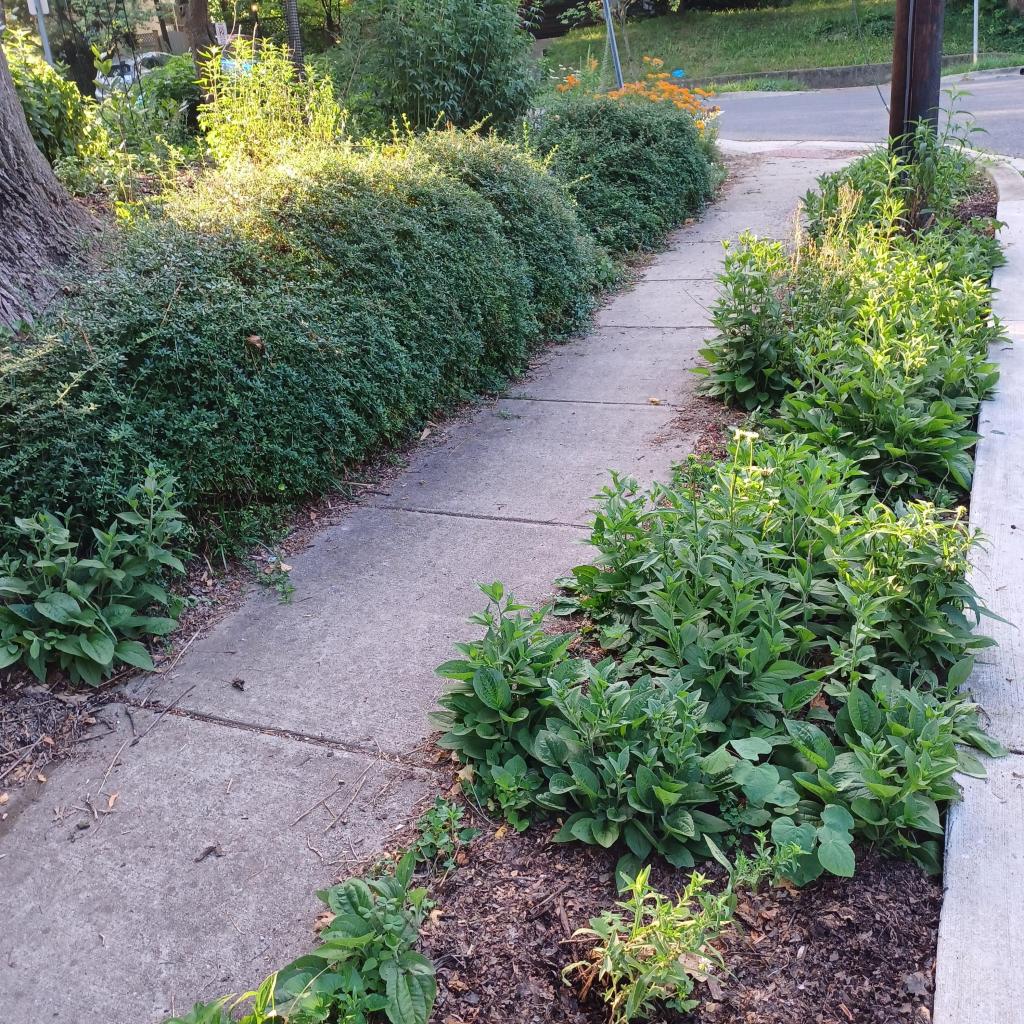
By July the following year, the ROW had become more vibrant, in part because intriguing native species drifted into the more welcoming soil once the dense mass of liriope was gone. The tall plant in the foreground of the picture is late boneset (Eupatorium serotinum), which produces beautiful white flowers in late summer though fall and grows to about five feet tall.

A more diminutive visitor that established a foothold was Philadelphia fleabane (Erigeron philadelphicus), which has pale pink aster-like flowers in May.
Encouraged, I pulled out the Pennisetum grass I had planted years earlier at the top of the ROW, which is now recognized as invasive, and replaced it with seedlings of native purple lovegrass (Eragrostis spectabilis) ordered from Izel Plants.
The bank transformation, 2021-2023
In the fall of 2021, I was ready to start tackling the bank on the opposite side of the sidewalk, which was crowded with invasives such as bush honeysuckle, English ivy, vinca and wintercreeper euonymus, none of which I had planted. My first step was to cut down the honeysuckle, painting the freshly cut stump with glyphosate to prevent it from resprouting.

In the spring of 2022, I reduced the footprint allotted to the vinca and ivy by pulling much of it and using plastic edging to keep it from reclaiming its lost territory. I planted tall coreopsis (Coreopsis verticillata) and a few other native perennials at the sunny end of the bank now freed from vinca.

A crisis in early 2023 accelerated my invasive removal plans. Our plumber, followed by the WSSC, tore up a section of the bank to determine the source of a leaky water connection. By the time the leak was fixed and the trench filled with gravel, the shaded portion of the bank by the side of our house looked barren.
Not only was it unattractive, but the English ivy, wintercreeper and vinca were still lurking beneath the fill dirt and gravel. I laid down newspaper and cardboard to smother the vegetation and held it in place with 30-inch-wide rolls of burlap and landscaping pins.
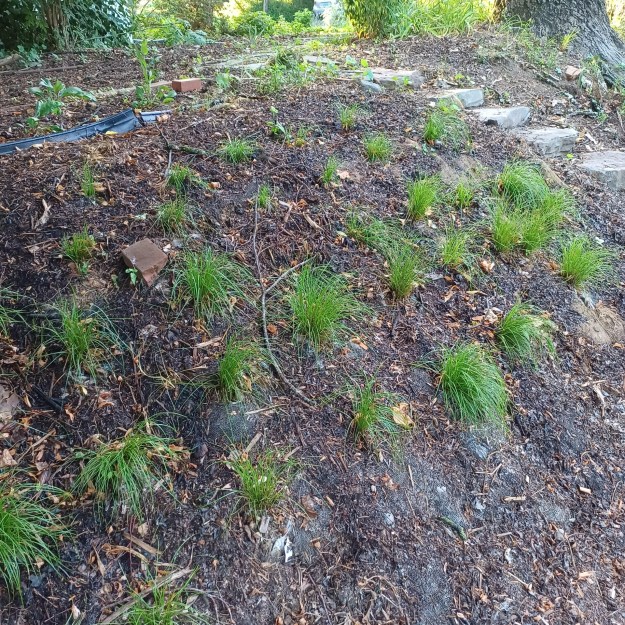
In the fall, I planted 50 plugs of Pennsylvania sedge (Carex pensylvanica), a native substitute for grass that does well in shaded conditions.
Uphill, in the sunnier terrain at the corner, I filled in the slope below the tall coreopsis with butterfly weed (Asclepias tuberosa), liatris (Liatris spicata) and yarrow (Achillea millefolium).
Successes and challenges in 2024
By late spring 2024, the sedge was looking healthy and starting to spread.
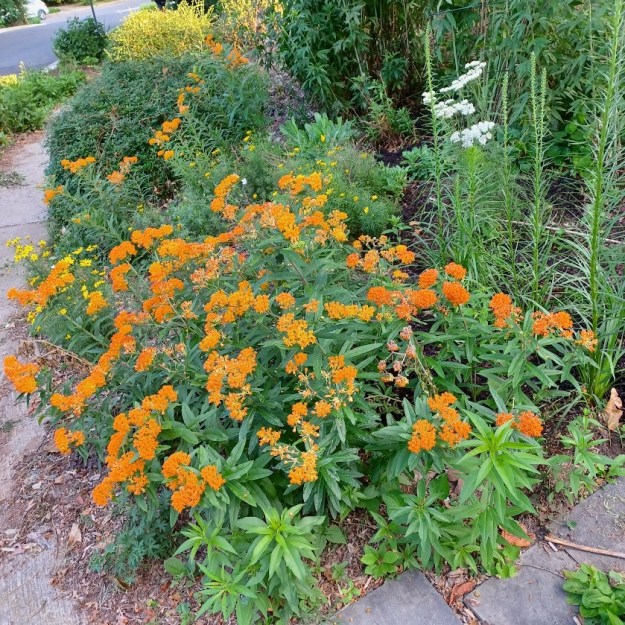
At the sunny end of the bank, the butterfly weed and achillea were bold and bushy in mid-2024, as shown in this photo just before the liatris started blooming. Bees buzzed over the butterfly weed, a host plant for the monarch butterfly.
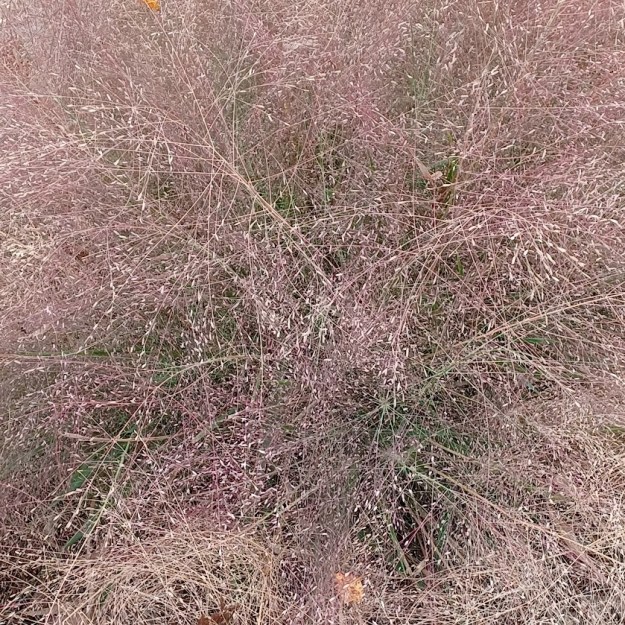
Another thrill was the purple lovegrass on the ROW, which two years after its planting had become mounds of pink haze in mid-summer. It thrives in hot, dry conditions and poor soils.
Alas, in 2024, deer also discovered this garden. They loved munching on the heuchera, my formerly lush go-to plant for shady spots, and helped themselves to the orange coneflower, which still managed to persist through the browsing. I’m experimenting with golden ragwort (Packera aurea), supposedly deer-resistant, as a replacement for the heuchera.
Outlook
As with any garden, the native plant gardener has to make adjustments as the plants (and animals) respond to the site.

The pussytoes on the ROW look great in early spring, but then a little dried out as the season progresses; perhaps I should move them to a slightly shadier spot.
The tall coreopsis on the bank grew taller than I expected; perhaps I should transplant it more to the background.
But all in all, it has been greatly satisfying to see the former thicket of weeds and invasives give way to a dynamic mini-meadow of native flowers, grasses and sedge.
Plant List
Butterfly weed: Asclepias tuberosa
Golden ragwort: Packera aurea
Hairy alum root: Heuchera villosa
Late boneset: Eupatorium serotinum
Liatris: Liatris spicata
Orange coneflower: Rudbeckia fulgida
Philadelphia fleabane: Erigeron philadelphicus
Plantain pussytoes: Antennaria plantaginifolia
Tall coreopsis: Coreopsis tripteris
 Friends of Native Trees in Takoma