
Porcelainberry (Ampelopsis glandulosa var. brevipedunculata) kills trees, shrubs, and other plants by completely blanketing them with foliage and shutting out sunlight.
Birds love the berries and spread the seeds widely. Takoma Park residents do not always recognize the threat embedded in the colorful berries that attract birds so well.
Photo credit: Steve Manning, Invasive Plant Control, Bugwood.org
Local sightings
Sligo Bridge


Park Avenue

Philadelphia Avenue

What to look for
Attaches by tendrils to other plants.
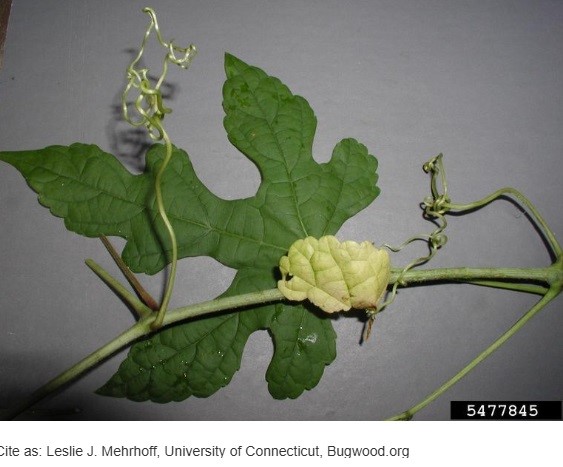

Flowers and fruit stand above the stem. Stems have white pith (not shown).
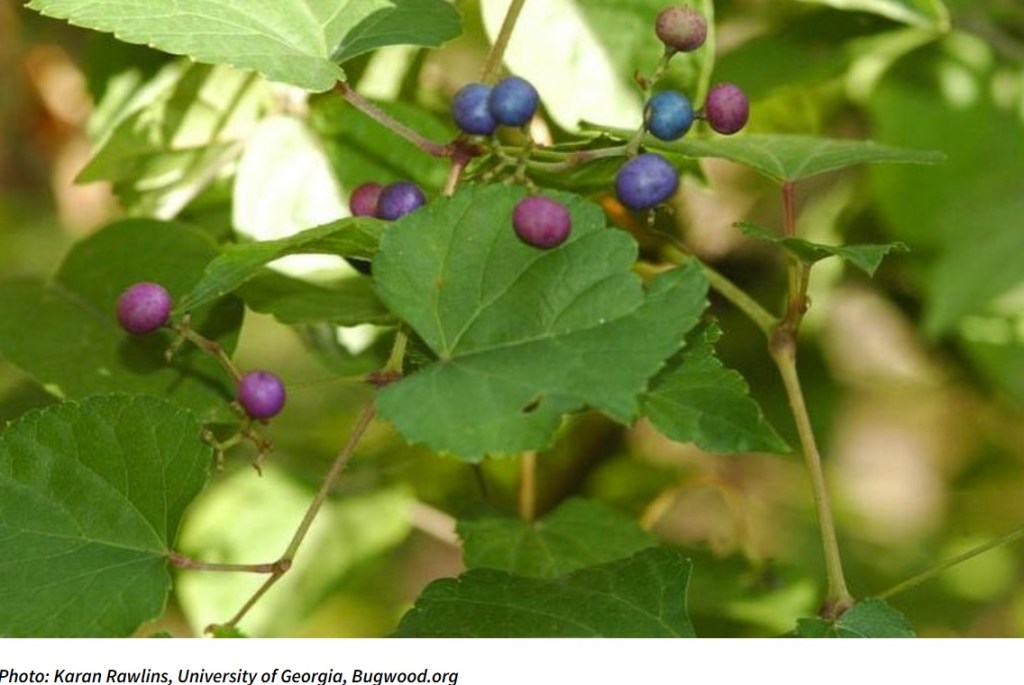
Colorful berries in fall
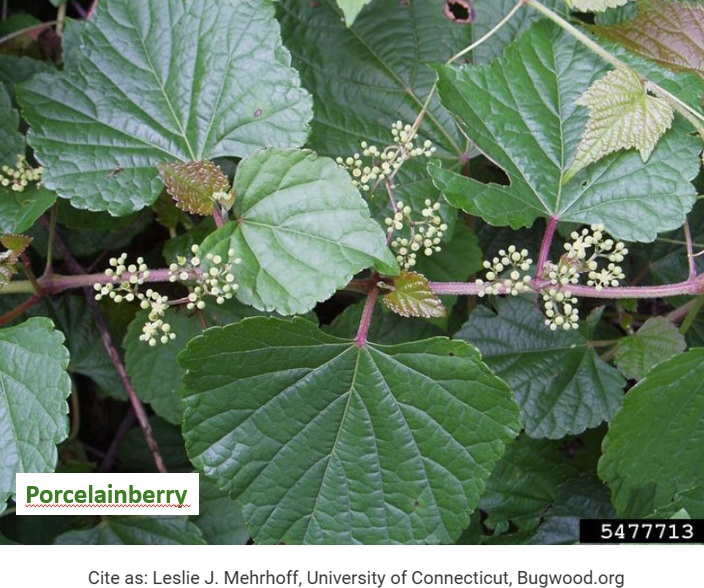
Flowers have umbel shape (see photo below) .
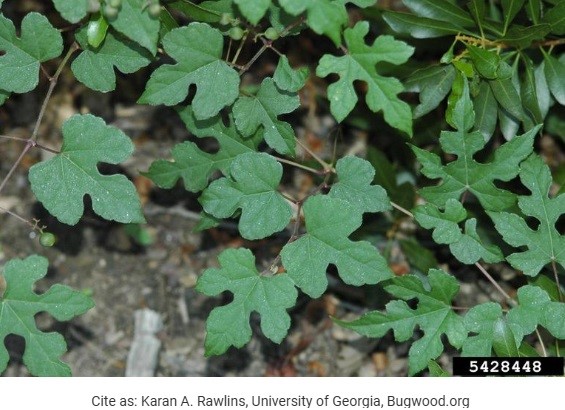
Opposite leaves with serrated edges and lobes, sometimes deep lobes.
See our native grape: Porcelainberry resembles Maryland’s native grape. It is unlikely you will find native grapevines growing in your yard unless someone planted them. If you are a Weed Warrior pulling invasives in public parks (yah!), definitely use the link to learn how to distinguish the native grapevines from the invasive porcelainberry.
What to do
Pull up the entire plant by hand and dispose in trash (NOT yard waste). Well-established plants can be difficult to remove because of their extensive root system. Use systemic herbicides to kill the entire plant.
For more information
1. 10 minute video on porcelainberry by NoVa Master Gardners
2. Plant Invaders of the Mid-Atlantic (pg. 118)
3. UME Extension
4. Mistaken Identities
5. MAIT
6. USDA Weed of the Week
7. Unwanted and Unloved: Porcelain-berry!
8. Grapevine vs. porcelainberry
 Friends of Native Trees in Takoma