On this page:
- Information on specific invasive species
- FONTT invasive plant profiles
- Where to look up invasive plant species
Links to related topics:
Introduction to Invasive Plants
A quick guide to removing invasive plants and native plants to replace them.
Definition of invasive species and related terms
Information on Specific Invasive Plants
Clicking on a species name in the list below will take you either to a
- website or document with information on that species, or a
- FONTT profile of the species with information compiled from multiple sources as well as links to more information.
See also Where to look up Invasives for information on invasive plants that are not listed below or to determine if another other plant species is invasive.
FONTT Invasive Plant Profiles

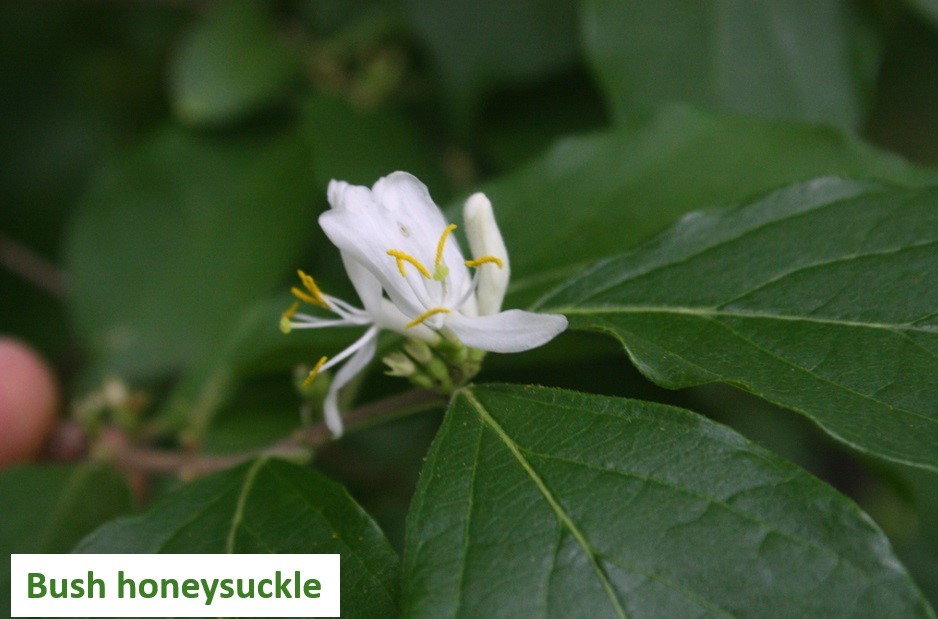
Bush Honeysuckle (various species of Lonicera)
Bush honeysuckles are several invasive species in the same genus (Lonicera) that are abundant in Maryland’s habitats with unfortunate results: outcompete native plants for soil moisture, light, and nutrients; reduce pollination in native plants; and exude chemicals that inhibit the growth of native plants. Read more…

Fountain Grass and Purple Fountain Grass (Cenchrus alopecuroides and Cenchrus setaceus)
Anna Mische John, Vegetation Maintenance Supervisor for the City of Takoma Park MD, sees in her work how these species of fountain grass are escaping from yards and crowding out natural growth in our city parks. Read more…

Liriope (Liriope muscari and Liriope spicata)
Liriope is right up there with fountain grass and porcelainberry as Anna Mische John’s least favorite invasive plants. Read more…
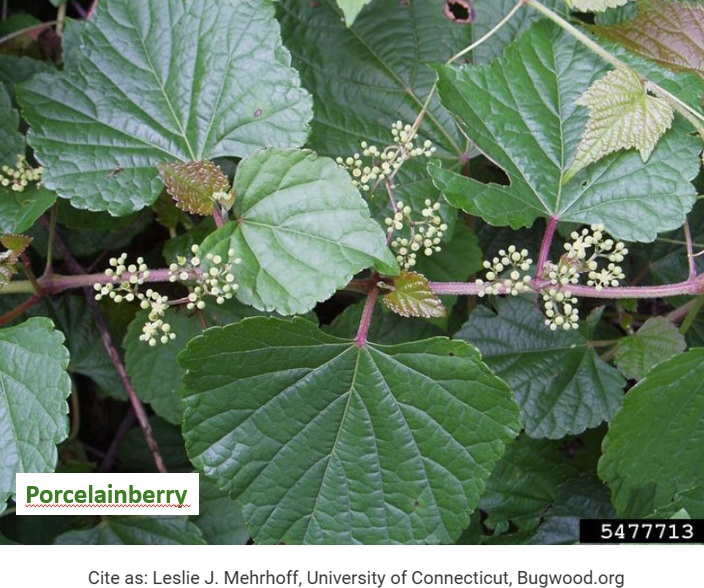
Porcelainberry (Ampelopsis glandulosa var. brevipedunculata)
This invasive plant kills trees, shrubs, and other plants by completely blanketing them with foliage and shutting out sunlight. Read more…

Rose of Sharon (Hibiscus syriacus)
Rose of Sharon crowds out native plants in natural growth areas by producing huge numbers of seeds and putting down deep tap roots. Read more…
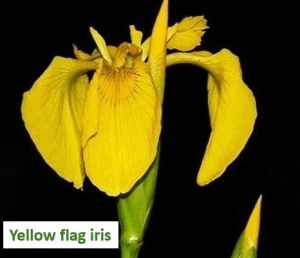
Yellow flag iris (Iris pseudacorus)
This invasive plant poses a serious threat to native plants in wetlands and along streams and rivers in the Chesapeake Bay watershed. Colonies of yellow flag can cause sediment to build up, which alters wetlands habitat by creating drier environments.
Eliminating yellow flag from your property, and encouraging your neighbors to do the same, helps protect habitat along Sligo Creek and the downstream waterways to which it connects. Read more…
Where to look up invasive plant species
Click on the name of the resource to look up which species it designates as invasive.
Mid-Atlantic Invaders Tool (MAIT): This online interactive database provides the most complete list of invasive plants, and plants at risk of becoming invasive, in Delaware, District of Columbia, Maryland, New Jersey, Pennsylvania, Virginia, and West Virginia. The list is easily searched, filtered, and downloaded. Basic information and numerous photos are provided for each species.
Maryland Invasive Species Council (MISC): Note that this list does not appear to have been updated since 2019, possibly because the effort has been transferred to maintaining the MAIT tool.
The Invasive Plant Atlas of the United States: This atlas is a collaborative project between the National Park Service, the University of Georgia Center for Invasive Species and Ecosystem Health, the Invasive Plant Atlas of New England and the Lady Bird Johnson Wildflower Center.
 Friends of Native Trees in Takoma