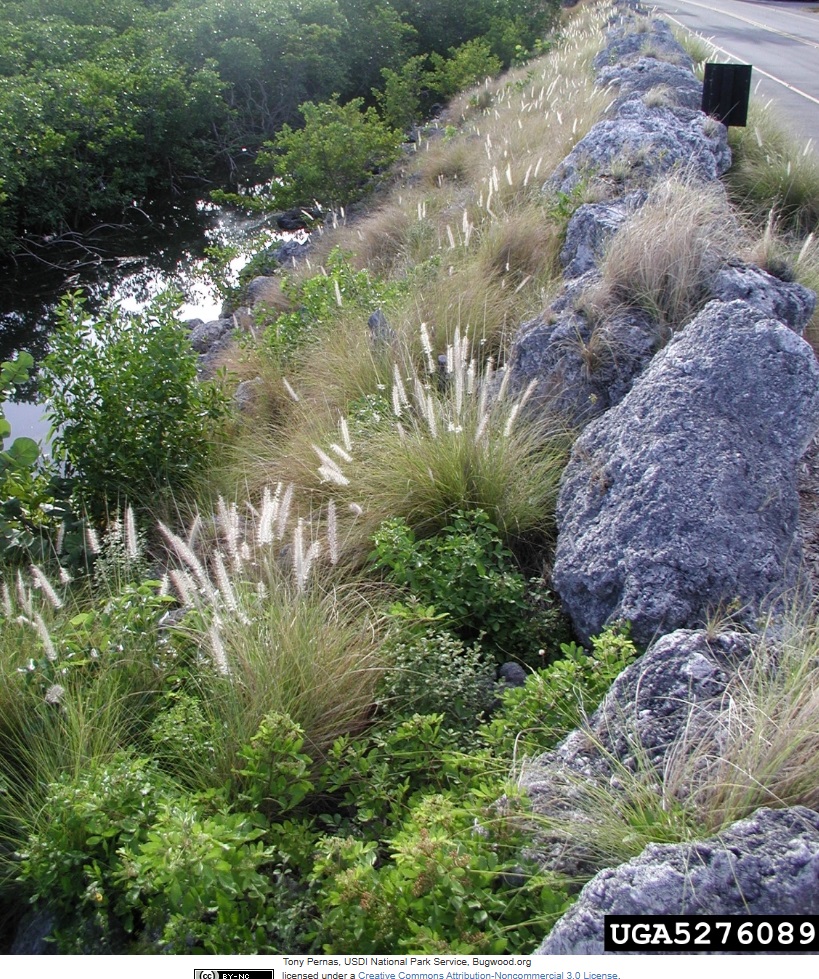
Fountain grass is one of the top three invasive ornamental plants that Anna Mische John, Vegetative Maintenance Supervisor for Takoma Park, would most like property owners to remove.
Anna finds two species most problematic in Takoma Park parks:
- fountain grass (Cenchrus alopecuroides)
- purple fountain grass (Cenchrus setaceus).
The two species can be tricky to distinguish, plus there are numerous cultivars of each species.
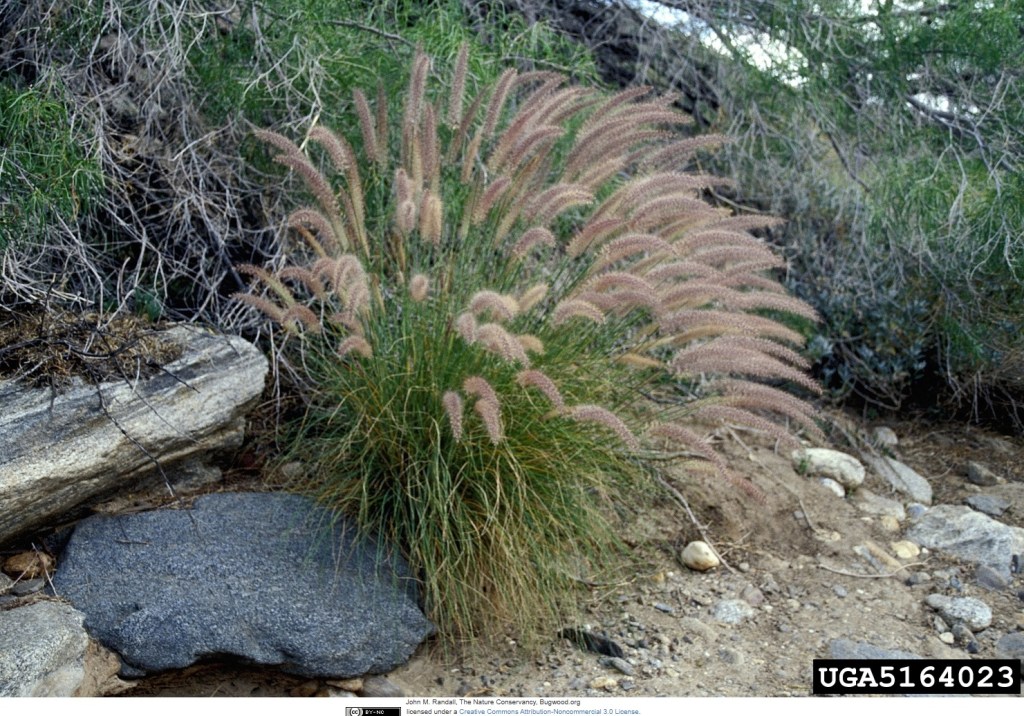
If the plant is a clumping perennial 2-4 feet high with full bottlebrush plumes, it is likely some type of fountain grass and should be removed.
Local sightings in Ward 1
The following photos were taken of six Takoma Park properties adjoining or across the street from each other. Purple fountain grass has spread to them all. Little wonder that Anna Mische John and her crew are waging a tough fight against Cenchrus in city parks.


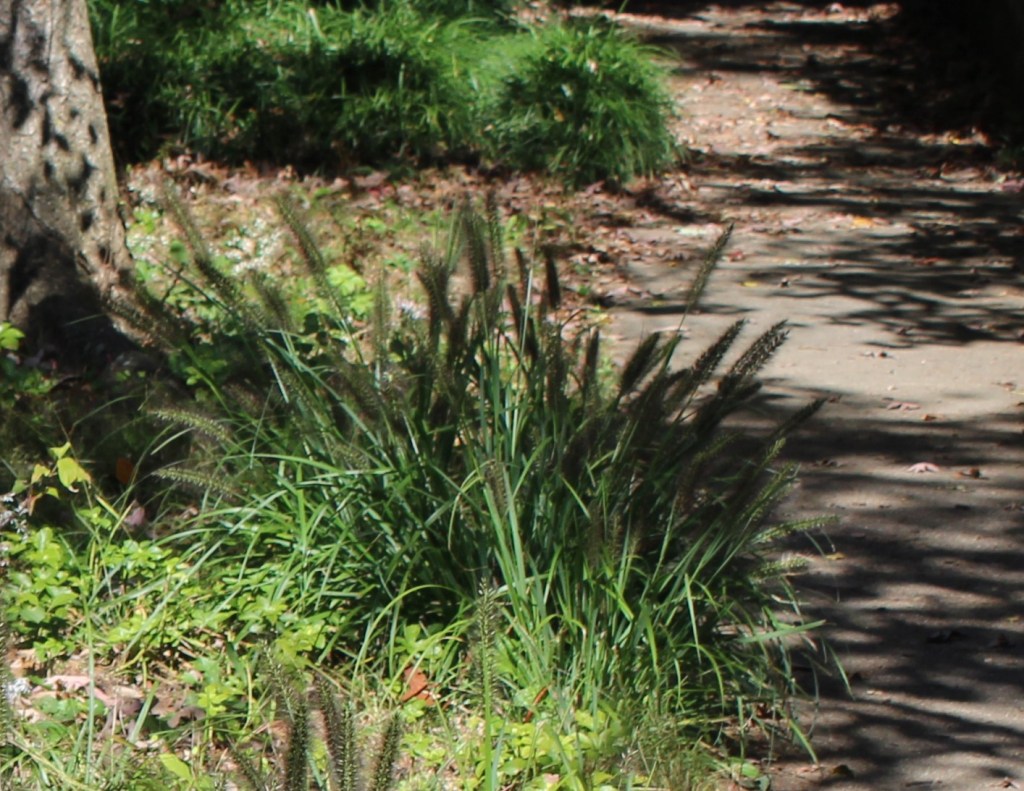

What to look for
Fountain Grass
(Cenchrus alopecuroides)
“[F]ountain grass is prized for its bottle-brush inflorescence and arching ‘fountain-like’ leaves. Growing approximately two to three feet in height, the species is most conspicuous when it blooms towards the end of the summer and fall, producing pinkish white to brown flowering spikes.” [5]
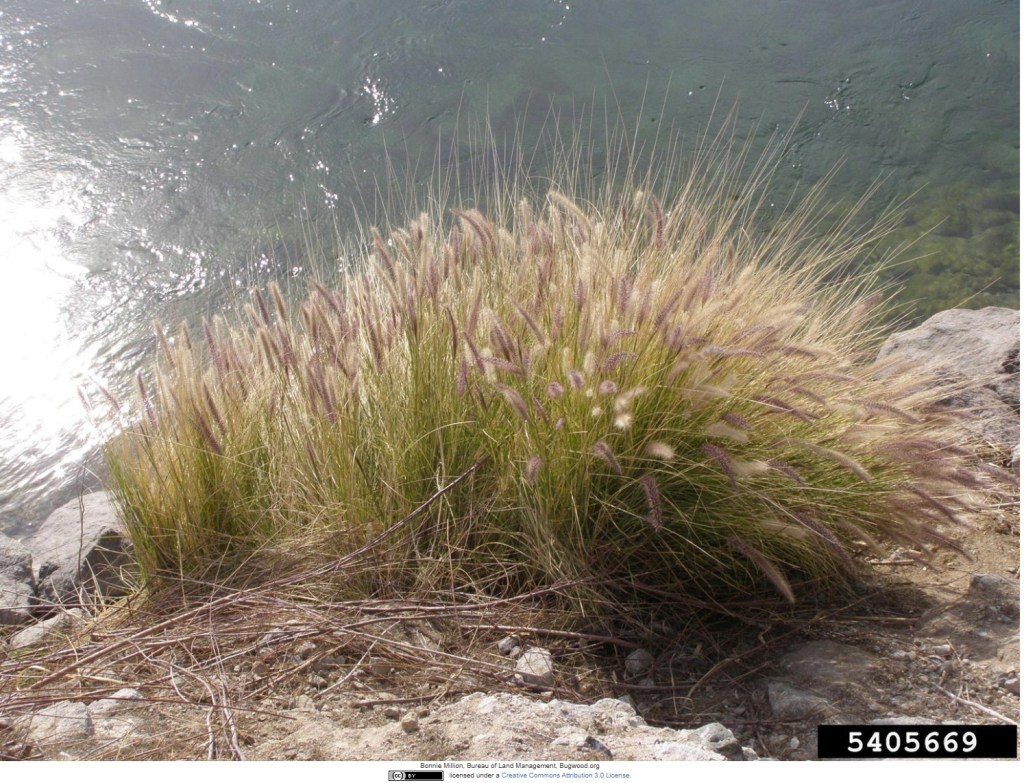
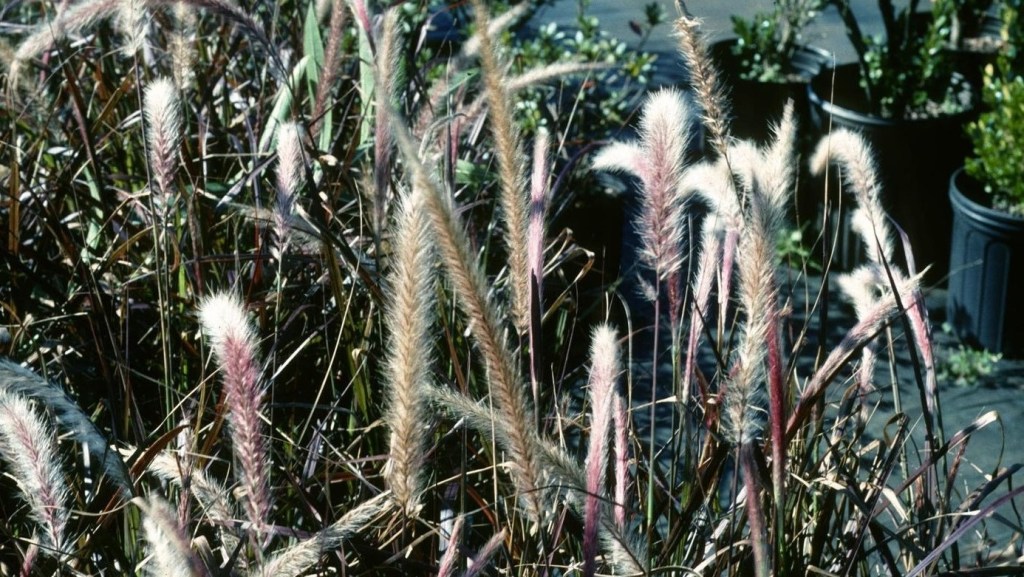

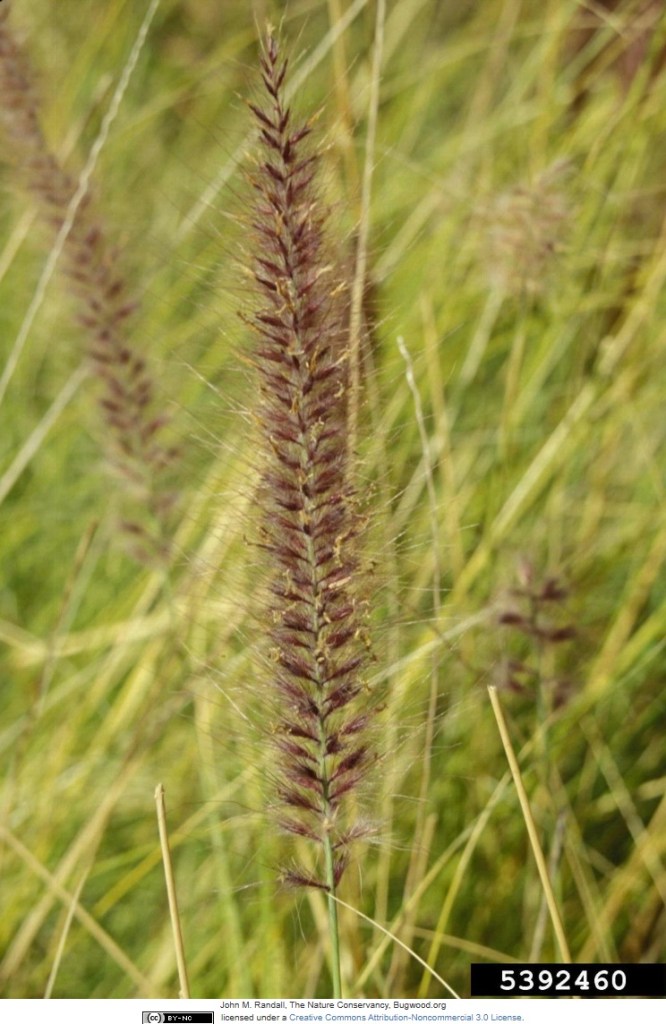
Purple Fountain Grass
(Cenchrus setaceus)
“An attractive perennial grass with a densely clumped growth form and erect stems that grow 2 to 3 feet high. The small flowers of fountain grass are grouped in pink or purple, bristly, upright inflorescences 6-15 inches long. Fruits are small, dry achenes adorned with long showy bristles.” [4]
What to do
Uproot the plants and throw them in the trash along with their seedheads. Out of an abundance of caution, do NOT put in yard waste pickup or in compost. Seeds remain viable for around six years, so be prepared to uproot repeatedly.
As with any other invasive infestation complex, Fountain grass is best managed via a combination of mechanical and chemical means. Very small populations may be effectively controlled by careful hand pulling. Larger populations may warrant foliar spray application. All managed infestations should be monitored for several years to manage any germination of new seedlings or re-sprouting of remaining roots that occurs. New seedlings can be hand pulled or sprayed.
Lower Hudson Partnership for Regional Invasive Species Management
For more information
1. Cenchrus alopecuroides information from Arlington VA Master Gardeners
2. Video Invasive Plants: Fountain Grass
3. Mid-Atlantic Invaders’ Tool on Purple Fountain Grass
4. Weeds Gone Wild: Purple Fountain Grass
5. Lower Hudson Partnership for Regional Invasive Species Management
 Friends of Native Trees in Takoma