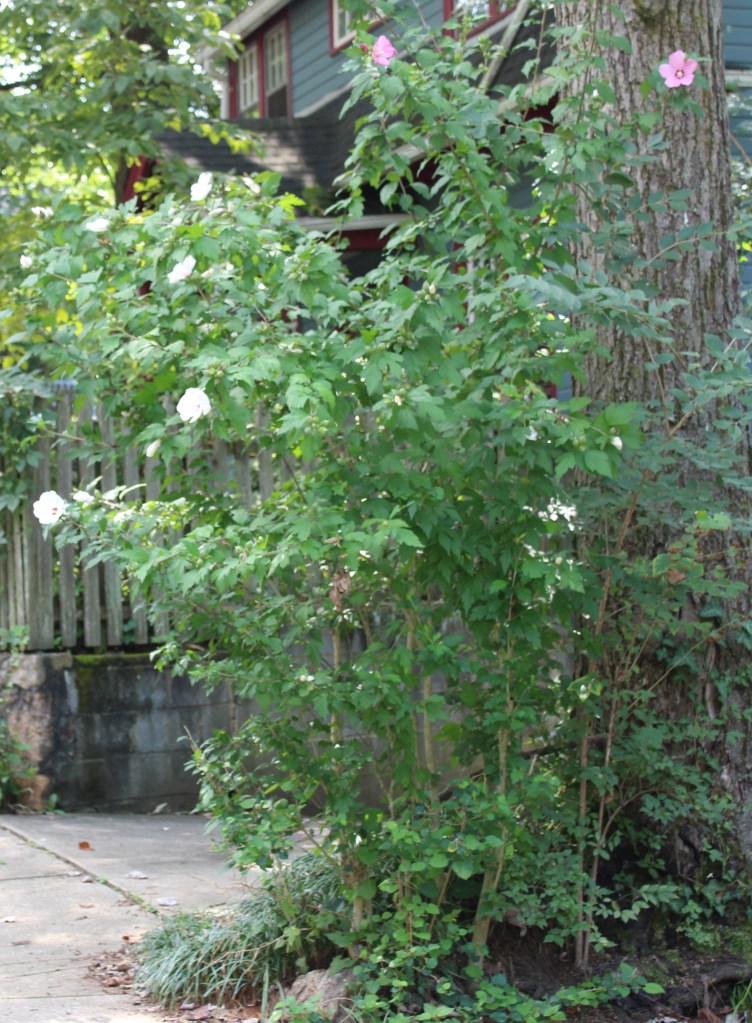
Rose of Sharon (Hibiscus syriacus) crowds out native plants in natural growth areas by producing huge numbers of seeds and putting down deep tap roots.
Anna Mische John, Vegetation Maintenance Supervisor for the City of Takoma Park, puts rose of sharon among her most hated invasive plant species for the harm they are doing in city parks. The Maryland Invasive Species Council lists rose of sharon as an invasive species of significant concern.
Local sightings
Rose of Sharon between Philadelphia and Maple Avenues



What to look for
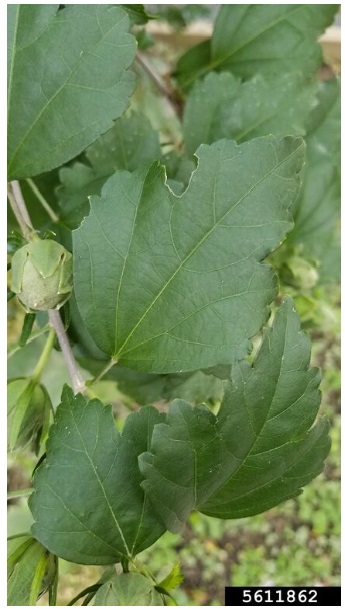
Leaf photos: Rebekah Wallace. bugwood.org
Three-lobed leaves, coarsely toothed.
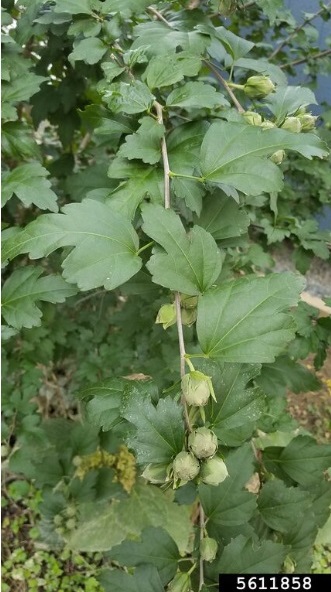

Grows to 8-10 ft. shrub
Shrub form photo: Jim, NC Extension Plant Toolbox
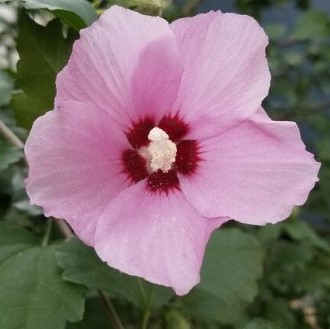
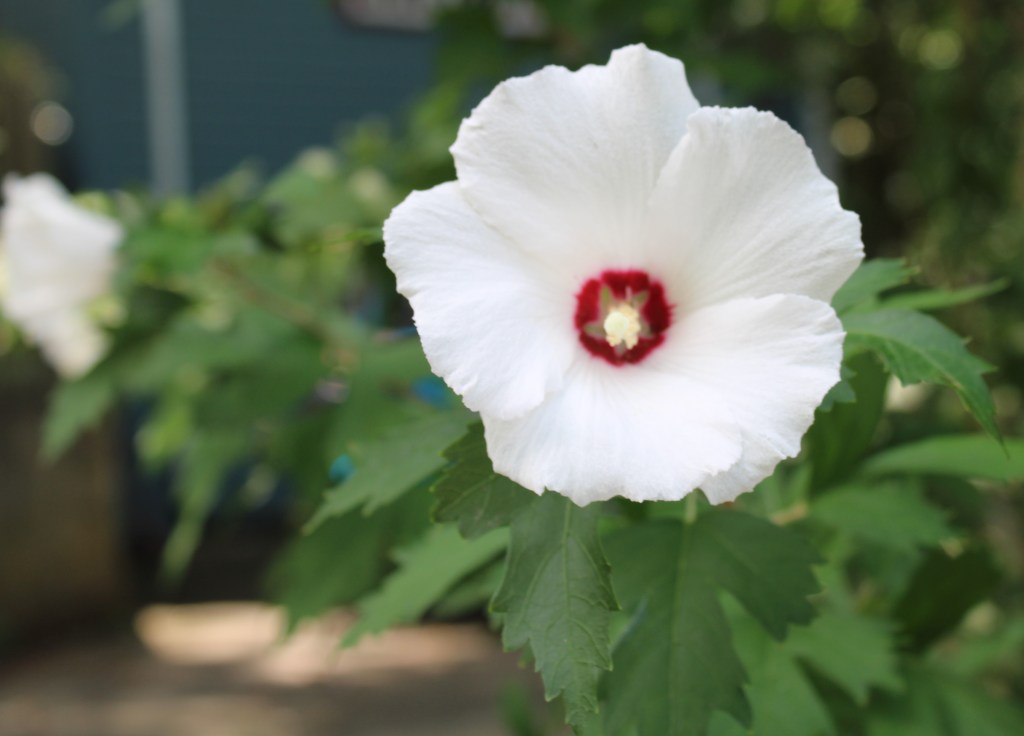
Five petaled flower, white to reddish-purple
Photo credit: Rebekah Wallace, bugwood.org
See USDA Weed of the Week for more identification tips
What to do
Pull or mow over seedlings. Uproot the entire root system of shrubs or use a general use herbicide.
Several sterile cultivars exist for rose of sharon. In regard to buying sterile cultivars, the University of Maryland Extension Service notes, “…While this may help stop the direct spread of seedlings into wild areas, it is not a complete solution, since these plants often can still flower and their pollen can fertilize the flowers of escaped plants, allowing them to produce seeds for further spread.“

As with UMD, I’m dubious of sterile cultivars. Often they are mostly sterile, besides still being an advertisement for the species to others.
Anna Mische John
Vegetation Maintenance Supervisor
City of Takoma Park MD
For more information:
1. USDA Weed of the Week
2. Master Gardeners of Northern Virginia
3. Invasives.org images
4. UMD Extension
5. NC Extension Plant Toolbox
6. Basal bark herbicide application for shrubs
 Friends of Native Trees in Takoma