(Originally Posted January 8th, 2025)
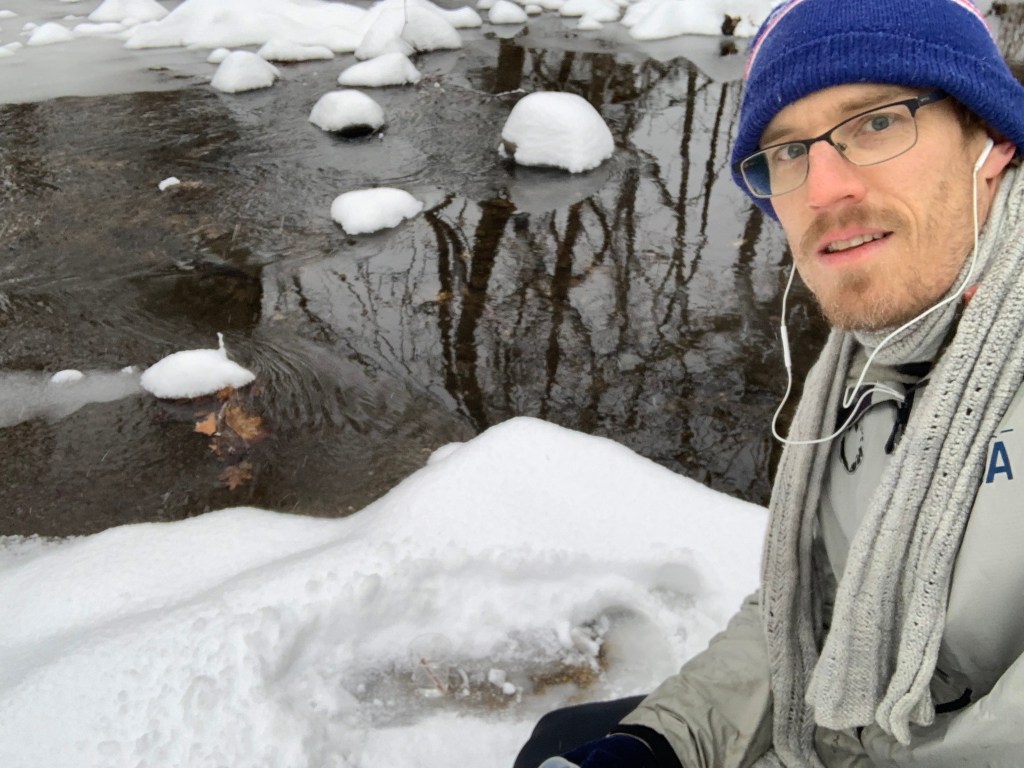
The ride down East-West Highway is grim: breathing exhaust and tasting salt; soiled mounds of plowed snow peppered with trash. But, down by the banks of our freshwater creeks, magic awaits.
I arrive at the confluence of Sligo and Takoma Branch on this cold winter’s afternoon. Across a field of white, I follow my footprints left in the snow. Preoccupied with my phone, I am startled by a large, ungainly shape rising from below the edge of the streambank. A great blue heron (Ardea herodias), disturbed in its winter vigil, ascends above me and sails out of sight.
This magical moment is much needed. Over the past four days, I have measured progressively higher levels of chloride in the water, levels that indicate toxicity, ecosystem damage, and acute death. Yesterday’s reading at Takoma Branch was the highest ever recorded by the FOSC Salt Watch, and was over seven times the level of salt that EPA defines as acute exposure for aquatic life.
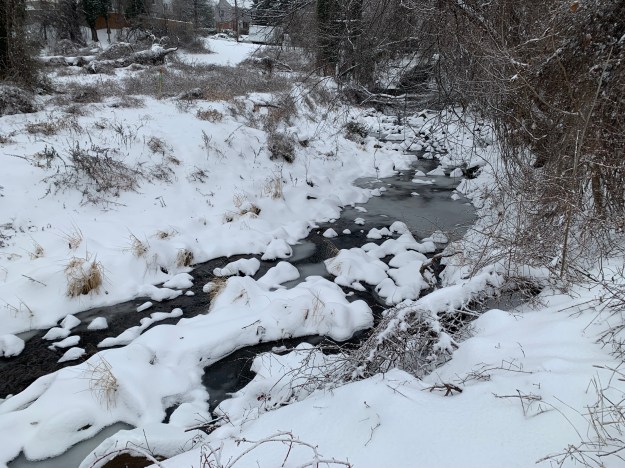
I clamber down the steep bank, then frog leap from rock to rock to get to the center of the stream where I take a sample. The water is frigid; the yellow sun low behind bare, black trees. Sample in hand, I take an impromptu hike through the small woods bordering Takoma Branch.
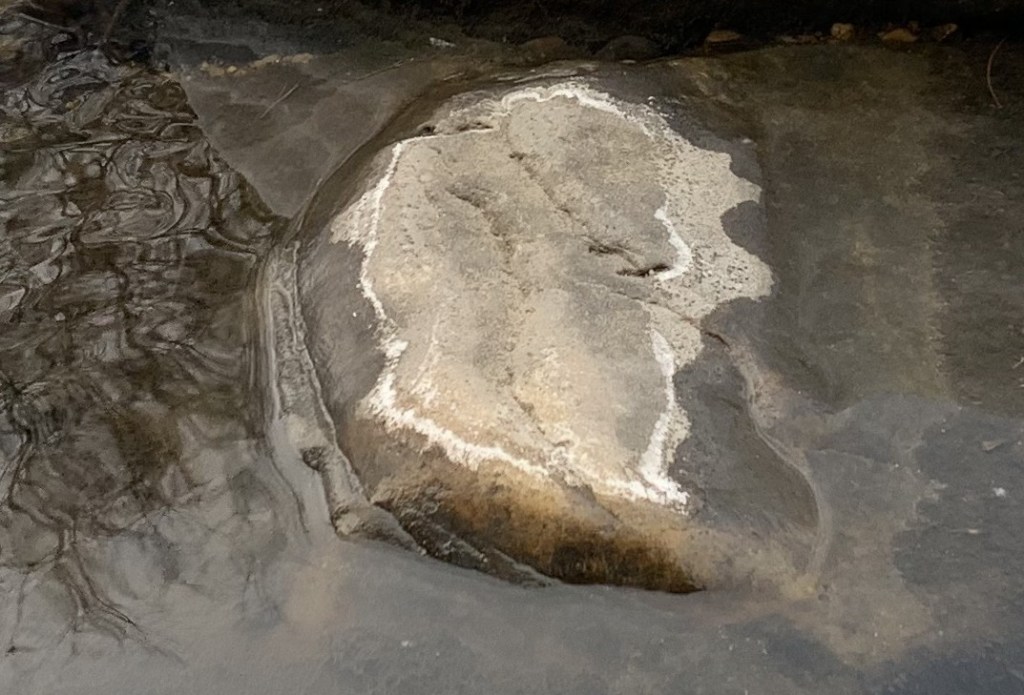
At an old pedestrian bridge an open concrete gutter runs from the end of Red Top Road into the creek. A large plastic bag halfway down the drain catches my attention. It’s an empty 50-pound bag of salt.
Today’s readings will show a slight downturn from yesterday’s peak level here at Takoma Branch, where cardinals flit about searching for food, deer eye me warily from icy thickets, and the waters continue to flow.
By Slater Knowles
Learn ways to be SaltWise around your home.
Slater’s Work as a Salt Monitor
Slater, a long-time FONTT member, also volunteers with Friends of Sligo Creek Salt Watch. He regularly measures the level of chloride at two locations: Sligo Creek downstream of East-West Highway and Takoma Branch just before it enters Sligo.
On January 7th, the chloride level in Takoma Branch was 6,604 milligrams per liter, over seven times the level of salt that EPA defines as acute exposure* for aquatic life (860 mg/L).
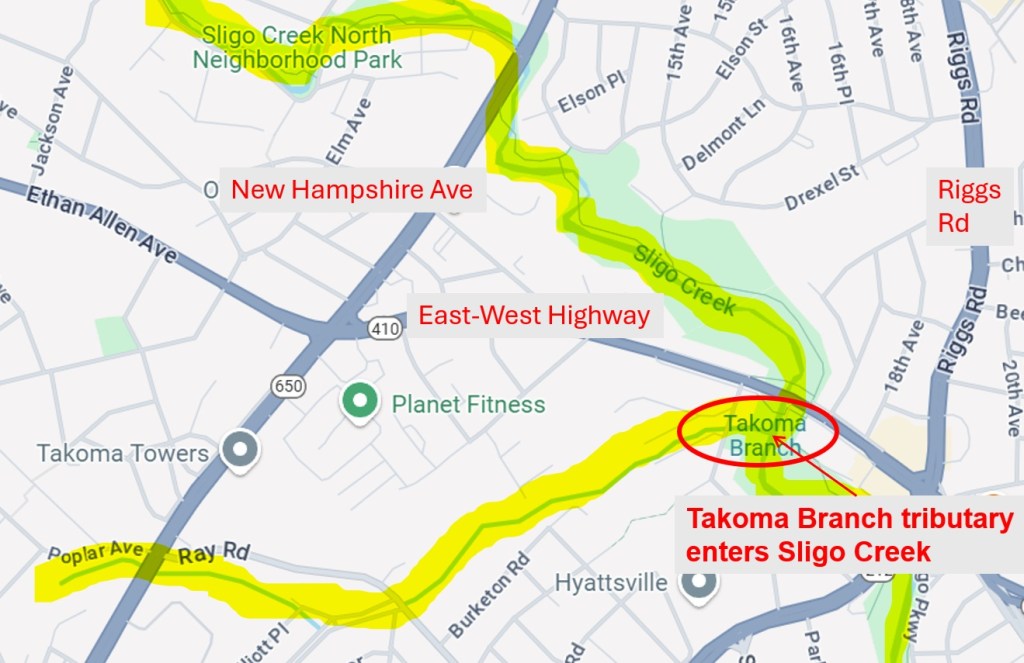
* Acute exposure means that on average 50% of organisms die if exposed to this level of a toxin even one time. That does not mean that 50% of organisms at the Sligo Creek-Takoma Branch confluence died on January 7th. But a reading of 6,604 mg/L does indicate way too much salt for a healthy environment in this part of Sligo Creek on that day.
 Friends of Native Trees in Takoma