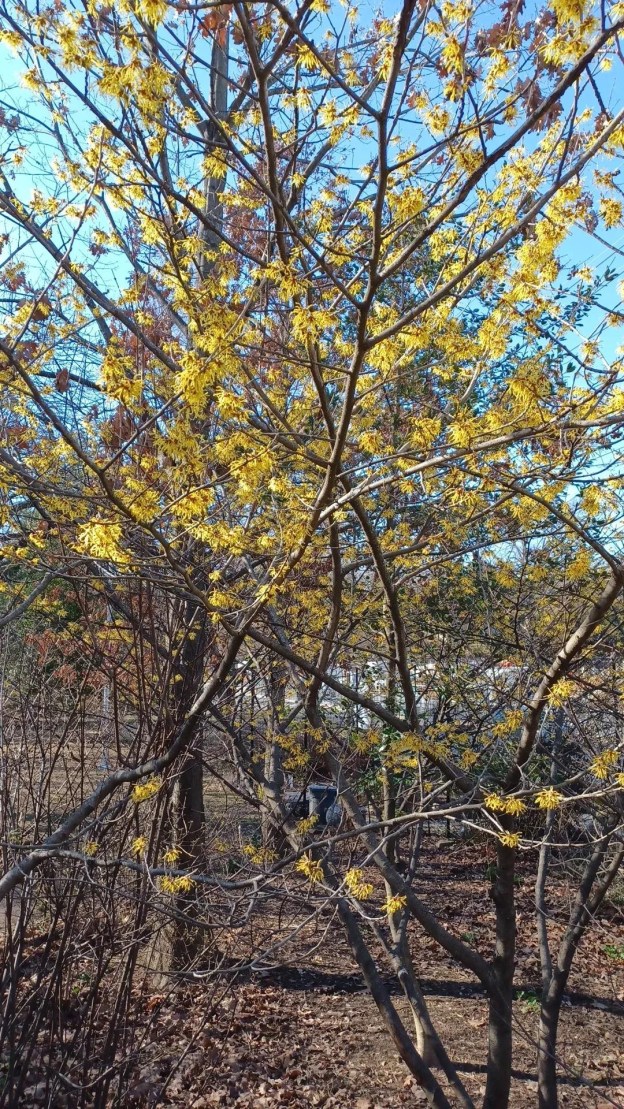
This month, Takoma Park’s witch hazels are entering their most bewitching season.

American witch hazel (Hamamelis virginiana) is a tall and unfussy native shrub with four-season appeal. Although it can handle full sun, it does best in dappled shade, such as along a woodland edge. It grows as tall as 15-20 feet but maintains a columnar or vase shape. The leaves, a refreshing green in summer, turn golden yellow in the fall.
Witch hazel is most intriguing from November into early winter. As its fall foliage falls away, it reveals fragrant and unusual yellow blossoms, which look as if they were crafted at a yarn fair.
The seedpods are another of the shrub’s unusual features. The pods from the previous season appear with the new blooms, split open, and propel one or two shiny black seeds 10 to 30 feet.

This month, a specimen in Stuart Armstrong Park is just beginning to show those fuzzy flowers. Meanwhile, a stand of witch-hazels the size of small trees in the park across from the library are exuberantly displaying their bright fall foliage.
Witch hazels can be welcome additions in yards of any size. In a smaller yard, a single witch hazel provides an appealing vertical accent. Gardeners with more space can also consider planting three or more for a deciduous hedge.

Moreover, for anyone needing an incentive to remove an Amur honeysuckle, a witch hazel is the perfect replacement; it has the same arching structure and height, but much greater visual appeal.
By planting a witch hazel, you do a favor for smaller creatures: witch hazel’s fruits and seeds appeal to birds and small mammals, while the leaves are enjoyed by the caterpillars of 72 moth and butterfly species. This includes—but of course—the witch-hazel dagger moth.
–Meg Voorhes
Photo credits: Meg Voorhes
 Friends of Native Trees in Takoma