
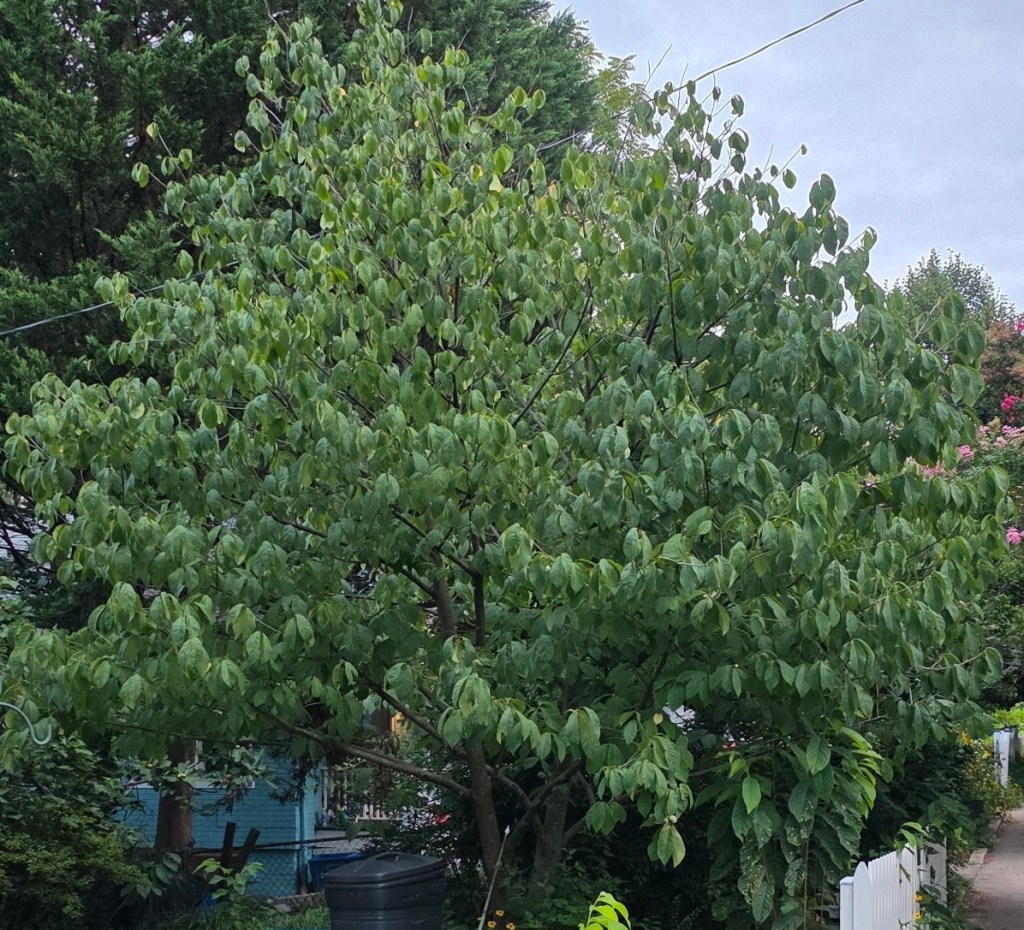
The pawpaw (Asimina triloba), which produces the largest edible fruit of any tree native to North America, has a bit of a cult following in Takoma Park and the mid-Atlantic.
Part of the appeal is the challenge—it’s not easy to successfully transplant a seedling best suited for the wild. There is also the allure of growing a tropical-tasting fruit in a Maryland backyard.

Twenty-five years ago I planted a pawpaw seedling in a shady corner of my yard, but it died by year’s end after briefly leafing out. What I didn’t know is that when transplanting a pawpaw seedling the taproot must be handled with great care.
This spring I stopped by the Takoma Park home of my friend (and FONTT member) Kopal Jha. Her front and back yards are a glorious explosion of native trees, shrubs, and perennials. Numerous pawpaws thrive in this forest-like setting.
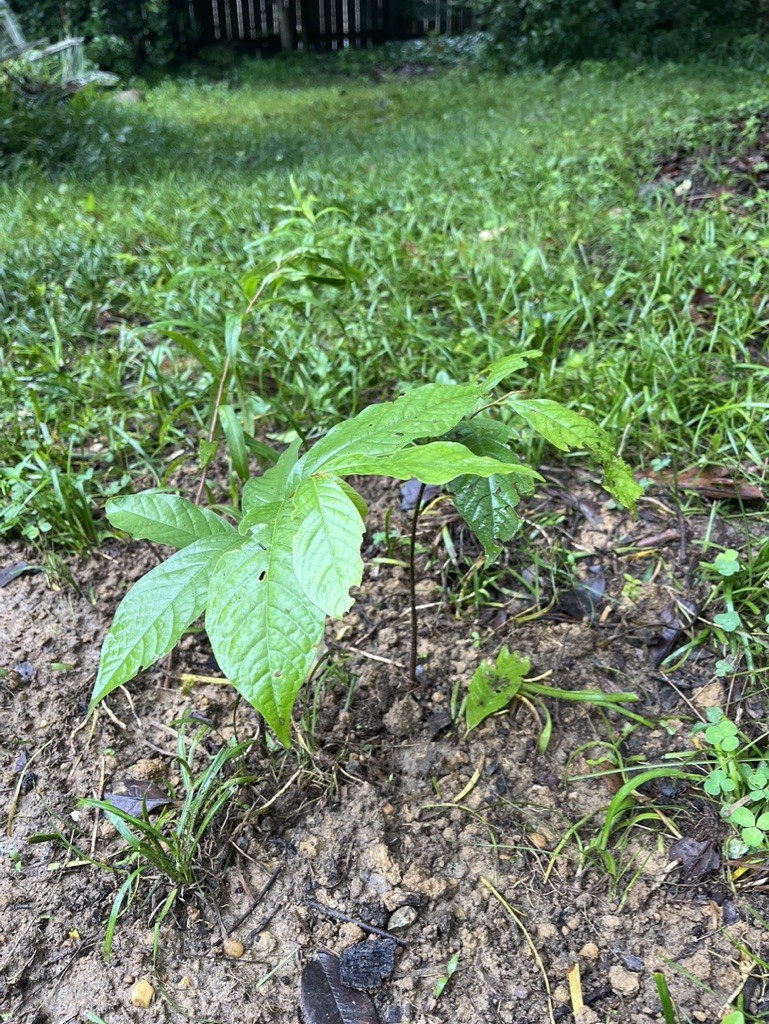
I contributed to Kopal’s personal mission to plant a million native trees in our area. She helped me dig up three seedlings from her yard. (To propagate fruit from non-grafted stock, one needs at least two pawpaws, as each is genetically unique.) I protected the taproots with as much of the native soil as possible when I transferred the seedlings to my yard.
Pawpaw seedlings need shade but once established the plants need sunlight to flourish. They prefer soil that mimics the forest floor—with lots of organic matter. Finally, they should be near water but not wet.
The pawpaw grows wild throughout much of the eastern U.S. It’s the only non-tropical member of the custard apple family. The size of the tree and the fruit are modest. An understory tree, it grows 15 to 30 feet tall, and the fruit easily fits in an adult’s palm.

One cannot find pawpaw fruit in a grocery store and rarely at a seasonal farm stand. Like the flavorful tropical fruits it is related to, pawpaws must be eaten as soon as they are ripe, so shelf life is quite limited. The custard-like fruit carries hints of mango, banana, and passion fruit.
The pawpaw’s maroon flowers attract butterflies and pollinators, while its fruits attract songbirds and mammals.
Inspired to learn more? Head to Long Creek Homestead Farm in Frederick, MD on September 20 for its annual pawpaw festival.
–Bob Gibson
Photo credits: Featured photo and top photo by Lizz Kleemeier, others by Bob Gibson
 Friends of Native Trees in Takoma