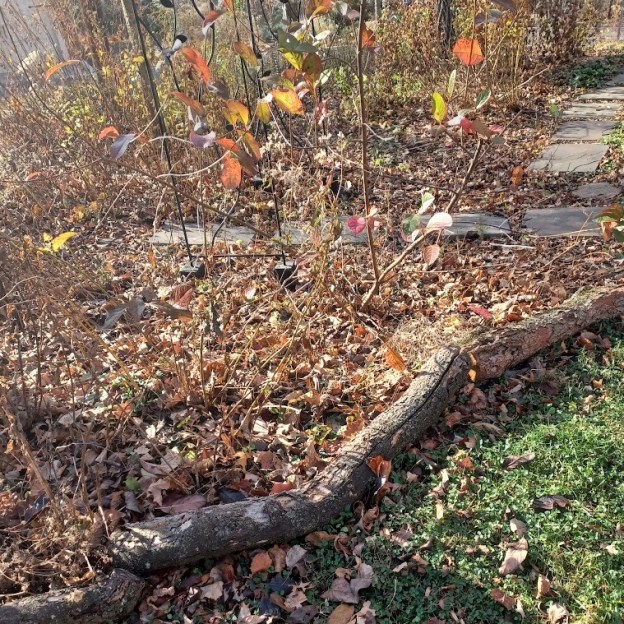
Let logs and tree branches lie in your yard or garden beds. They won’t really “sleep,” but slowly decay as natural processes consume the organic material and return it to the soil.
For the last three or four years I’ve let branches two to four inches in diameter lie in my backyard gardens. Most don’t last long.
So, what’s happening?
Sleeping logs, it turns out, host an even greater variety of organisms than snags, the tall stumps of dead trees that many of our neighbors leave standing in their yards to provide vital habitat for insects and the birds that eat them.
A trip through the backyard one early spring day showed the organisms at work in the sleeping logs and branches.
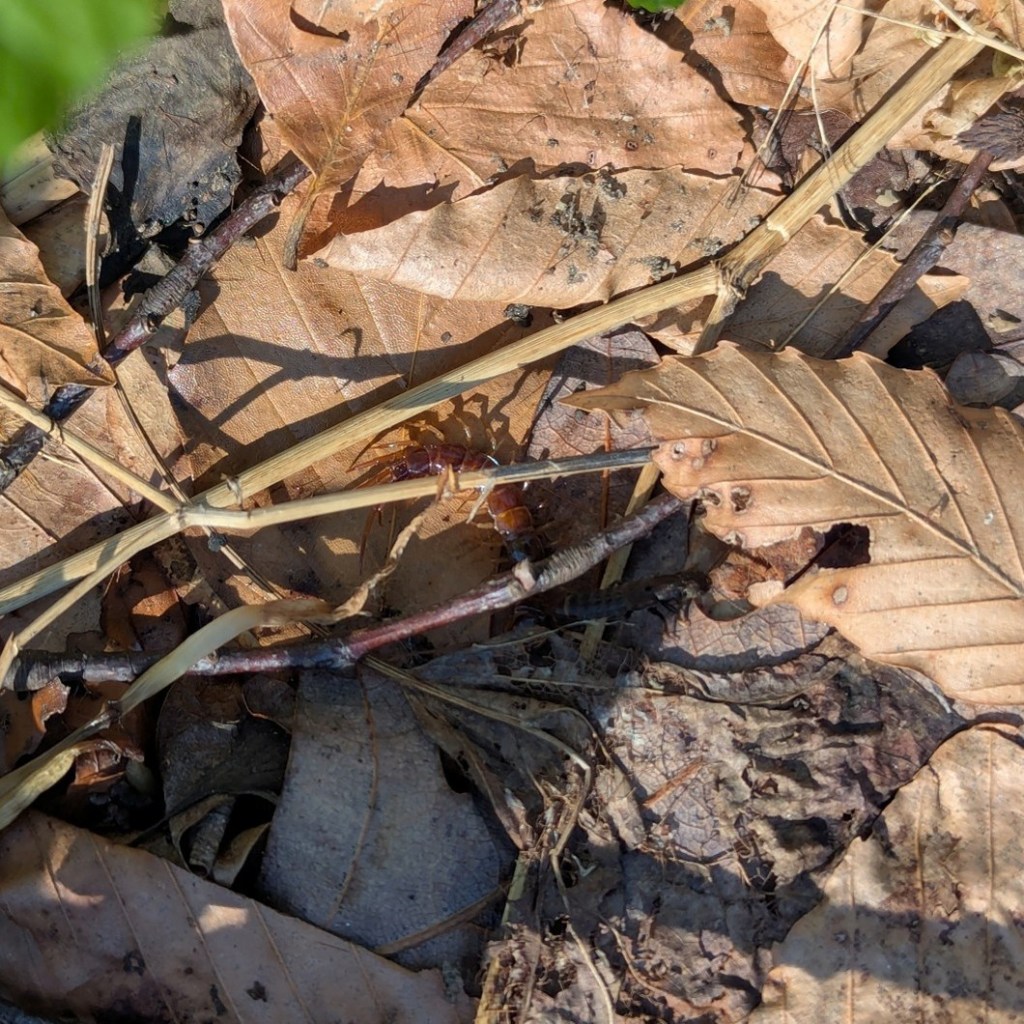
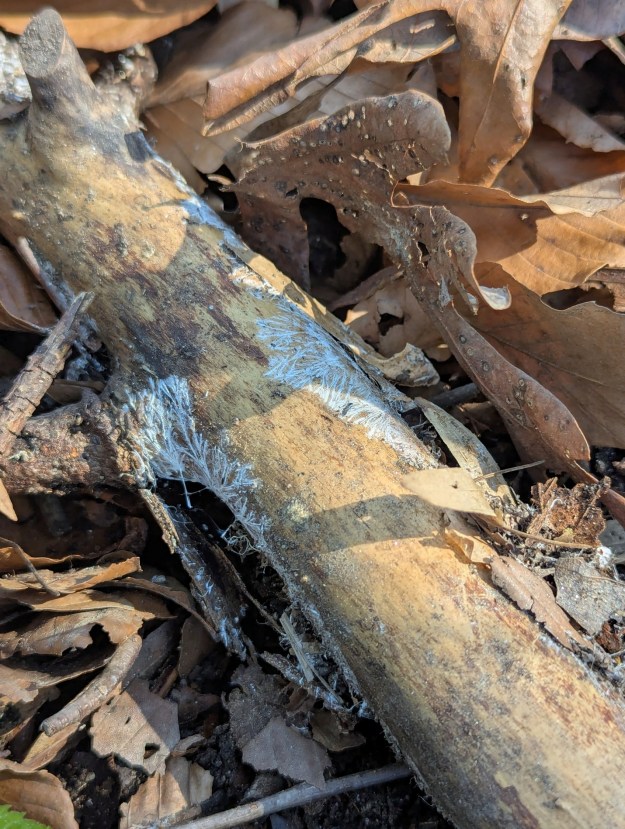
Shifting the leaves on top of one branch revealed the thin white lines of fungi that laced it, one of the first signs of decay. Lifting another branch sent insects scurrying, but a worm remained motionless. Atop leaves under another branch was a centipede, also motionless.
A pleasant surprise was finding an eastern red-backed salamander (Plethodon cinereus) under another log. These amphibians, as their name implies, are native to the eastern United States. They have no lungs but breathe through their permeable skin. To survive, they require a sufficiently moist habitat, such as under or around decaying leaves and branches.
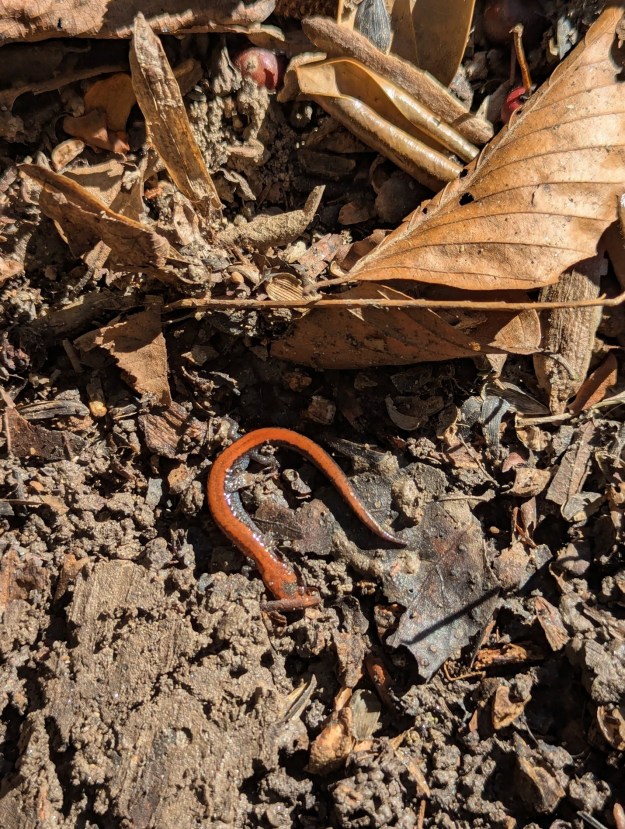
Although red-backed salamanders are not rare, I’d not seen one for several years. Spotting this one assures me that our backyard is a welcoming place for these natives.
If you want to let sleeping logs lie, consider the following:
- Make several piles of logs and branches in different configurations.
- Make sure that the log or branch contacts the soil surface.
- Keep termites from attacking a structure by placing the logs well away from the building.
–Tim Rahn
Feature photo by Meg Voorhes; all other photos by Tim Rahn
 Friends of Native Trees in Takoma