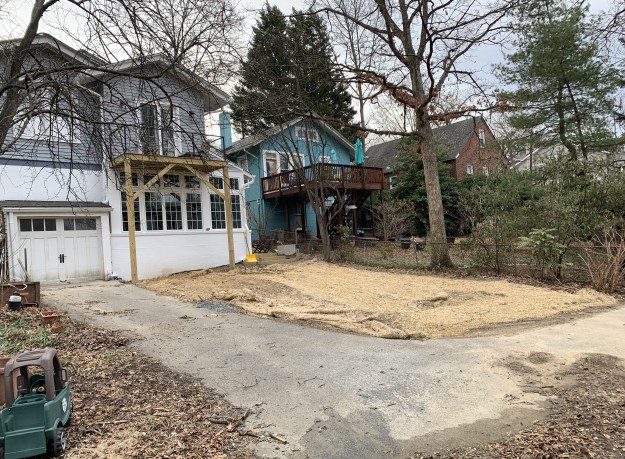
I have a great problem. After construction on the back of our Park Avenue house, we’re left with barren, rocky, and compacted ground. Now covered in a quilt of plastic and straw it lies dormant, terrifying, and exhilarating—a blank canvas.
This post is about possibilities. I have solicited thoughts from my fellow FONTT members, knowledgeable neighbors, and friends. There are varying opinions, but I have reached some basic tenets that we all agree on.

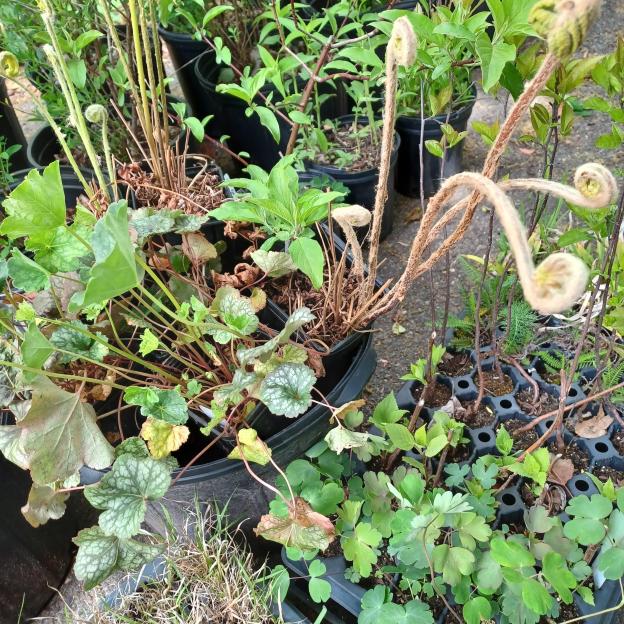
I will be planting a variety of plants: flowers, grasses, shrubs, and trees. They will all be native. The trees will come from the FONTT Tree Guide; other plants will come from UMD Extension’s database of Commercial Native Plants List. I will source from local native plant sales and nurseries, seed exchanges, and neighbors. I hope to plant saplings from FONTT’s nascent Backyard Nursery program.
I want this canvas to be as natural as possible. But, left alone it would likely become a thicket of bamboo and bush honeysuckle, stitched together with porcelain-berry vines (all invasives and all found on my property). So, natural might not be the right term.
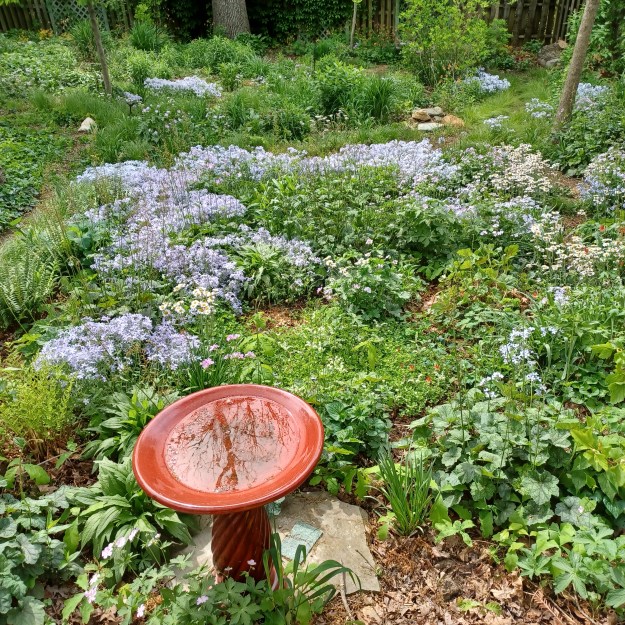
In their book, The Living Landscape, Rick Darke and Doug Tallamy employ the term “managed wilderness.” Their managed wilderness imitates nature, while considering aesthetic beauty and practical uses. The ideas and photo in The Living Landscape are inspiring. So, too, the work of Anna Mische John and the City of Takoma Park at Stuart Armstrong Park and Circle Woods inspires me, as do some of my neighbors’ backyards.
Important choices must be made to help bring balance back to our living world. To rewild my landscape will be a small gift to our natural world.
As I begin, I’d love to hear what others think: sknowl2@gmail.com.
—Slater Knowles
 Friends of Native Trees in Takoma