
Over the years, with the best of intentions, many of us in Takoma Park filled our gardens with plants to add beauty and greenery with little or no awareness that many of our choices were non-native species, and more than a few of those were considered invasive.
— Bob Gibson
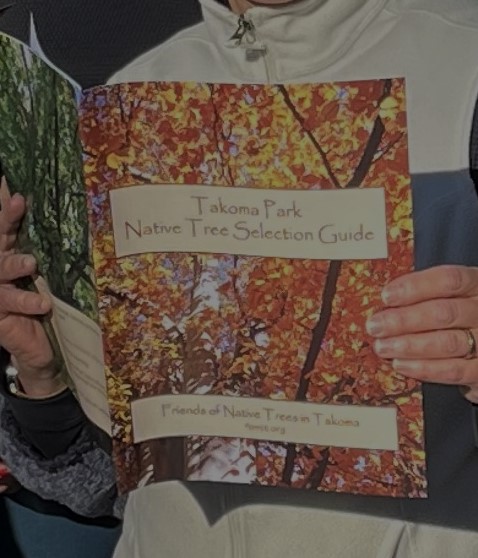
I’m a neophyte when it comes to native plants. My ‘ah-ha’ moment regarding the value of planting a native species came a few years ago when I picked up a copy of the Friends of Native Trees of Takoma’s Takoma Park Native Tree Selection Guide. I discovered that the white oak I had nurtured from a spindly twig more than 20 years ago to its current 50 foot height is a superstar or keystone species, hosting up to 498 kinds of caterpillars (an indicator of its biodiversity value).
Time to give myself a pat on the back!
I still didn’t get the difference, however, between a non-native and an invasive species. If native is good, both of the former must be varying degrees of bad.
Not so fast. The National Invasives Awareness Week of February 24-28, 2025 is a good time to set myself straight.
Once again, the FONTT website is a great one-stop resource. I started with FONTT’s definitions of invasives, a page that includes a four-minute animated short that succinctly parses the difference between native, non-native, invasive and pest. Bottom line, all invasives are non-native, but not all non-natives are invasive. Bell peppers and tomatoes are non-natives but not invasive. While they don’t contribute to the native ecosystem like native species do, they do no harm and provide food for our tables.
Doug Tallamy, the renowned entomologist from the University of Delaware, offers a succinct definition: “An invasive is a non-native species that’s displacing native species.”
All right, I think I get it. Like kudzu, the vine that is devouring roadside forests throughout the South. But surely this has little to do with anything we plant in our Takoma gardens.
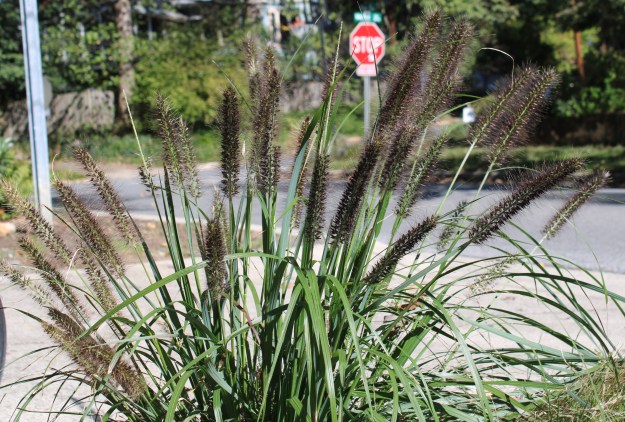
Purple fountain grass in Ward 1
Wrong. I was fascinated to find on the FONTT site links to the Takoma Park’s top invasives, including the three plants that the city of Takoma Park’s vegetation maintenance supervisor Anna Mische John considers our worst offenders – fountain grass, liriope and rose of Sharon. These plants may serve useful functions in our gardens but once seeds are spread by wind and birds to our parks and wild spaces, they can proliferate, aggressively crowding out the native plants that our insect, bird and animal life rely upon.
Despite the growing awareness of the damage invasives bring to a healthy ecosystem, (and the recent efforts of states like Maryland to prohibit their sale), the mainstream horticulture industry continues to prominently market non-natives — including invasives. Many non-natives originate in Asia (Tallamy estimates that one-third of the vegetation in the eastern U.S. is from Asia), including the first shrub I ever bought when we moved to Takoma Park.
The nandina that has thrived on the other side of our property from our white oak represents the other end of my plant ‘virtue’ scale.

This nandina, with its exotic name – heavenly bamboo – and its red and green leaves and bright red berries, so pretty when contrasted with a winter snowfall – is one of the invasive ‘bad guys.’ Those berries are one of the food sources of last resort for birds (some of which find the berries to be toxic). Once the seeds reach our parks, the nandina can take hold and flourish, further crowding out natives.
Photo of Bob’s nandina: How can something so “heavenly” be so bad?
So this spring, we’ll take the next step in fighting the spread of invasives one small property at a time, and dig up that nandina. I’ll be looking at a replacement from the list of native species offering similar visual appeal, with the added benefit of helping, not harming, the local ecosystem.
— Bob Gibson
Check out the post by Meg Voorhes, who had a similar educational journey to Bob’s.
 Friends of Native Trees in Takoma